
Last updated August 26, 2026
Free on-site gate assessment - hinges, posts, and your LiftMaster or Nice gate operator checked before anything is quoted
The assessment is free and the quote is the invoice.
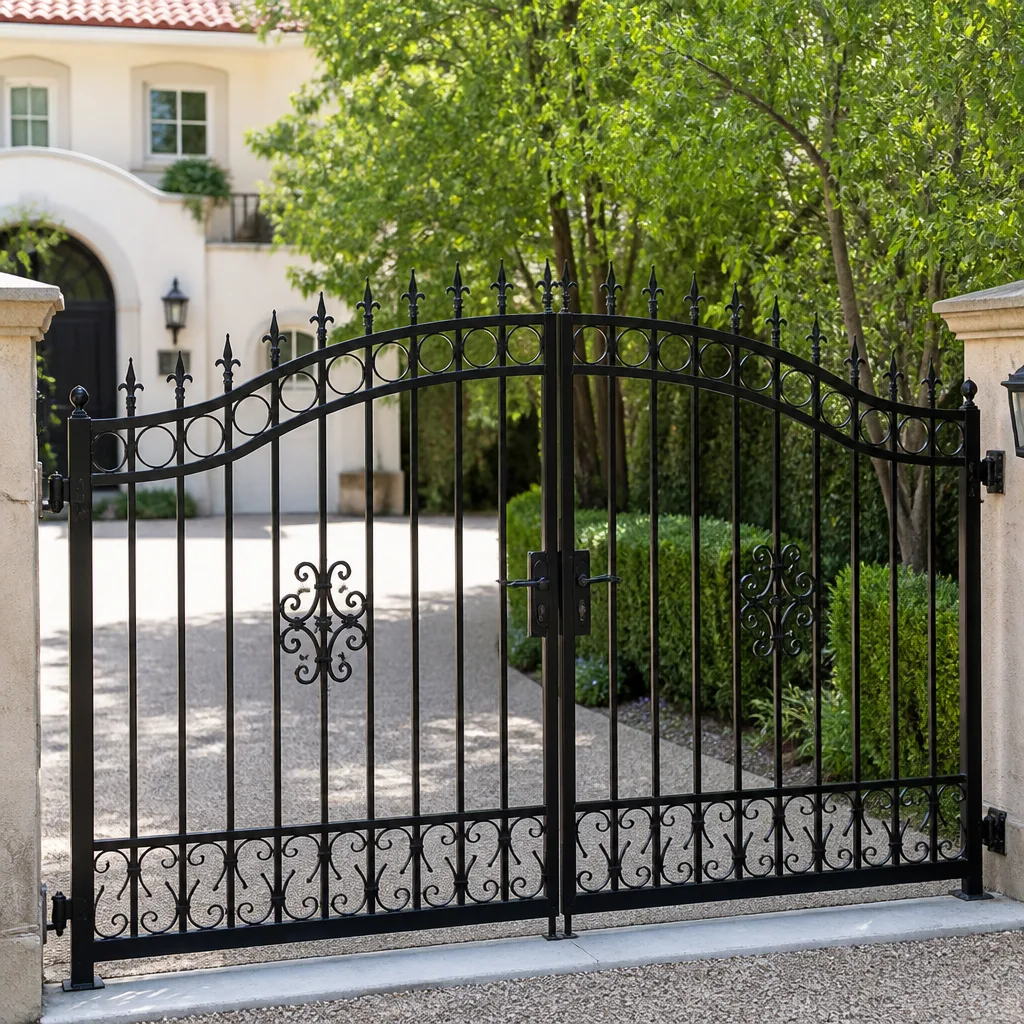
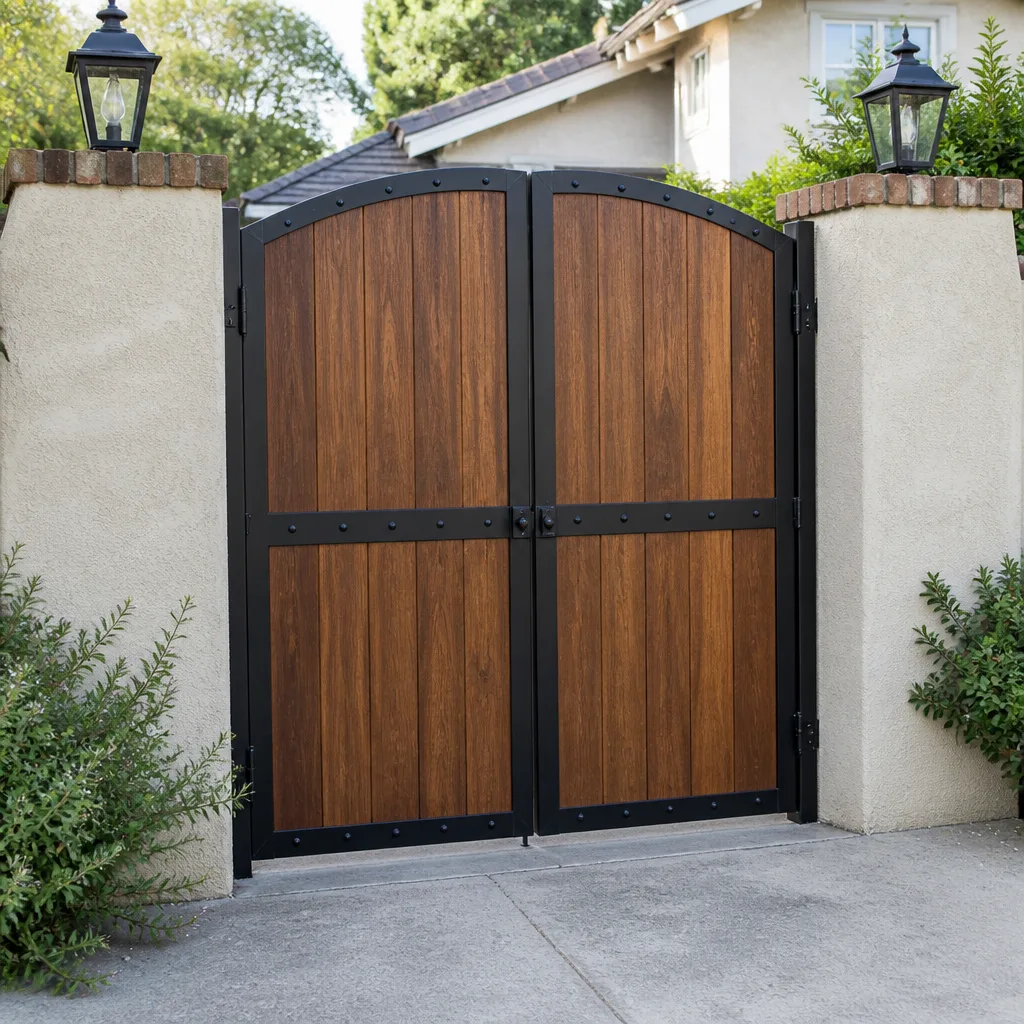
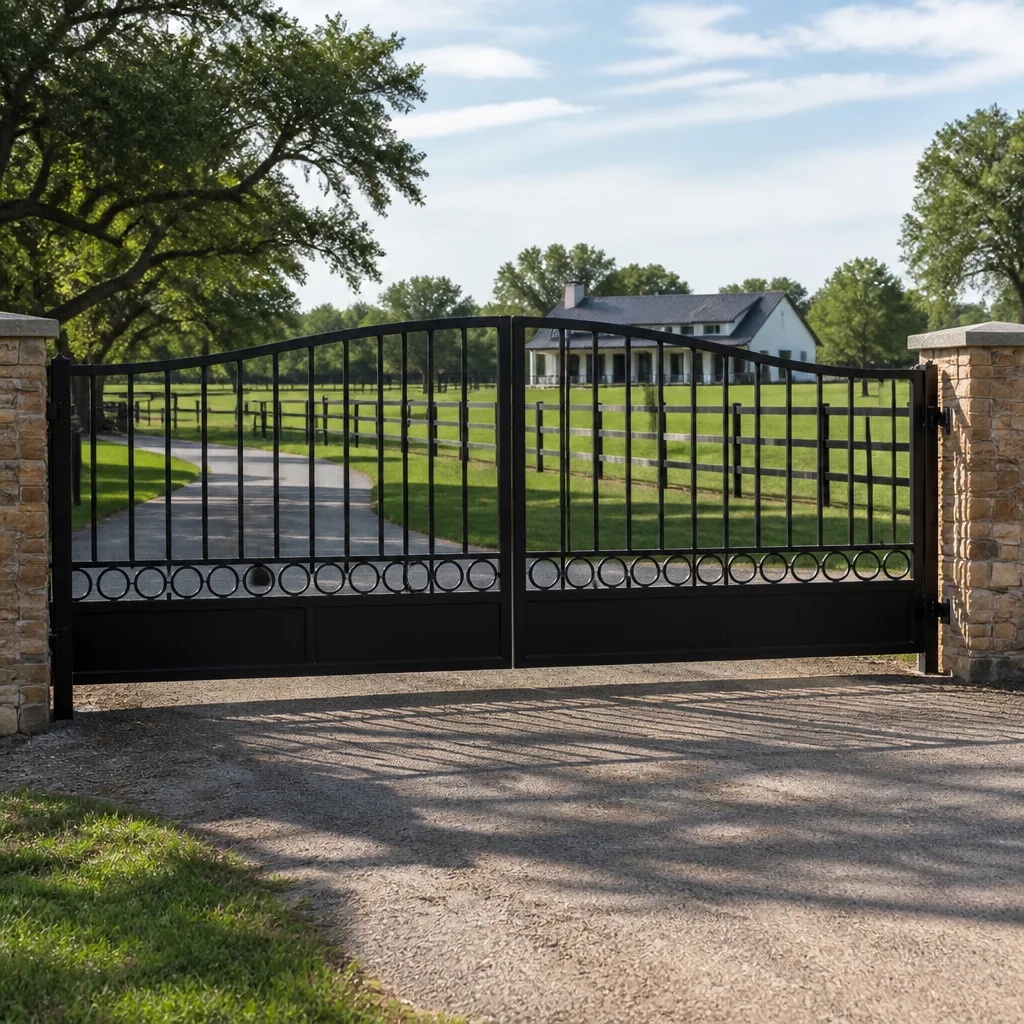
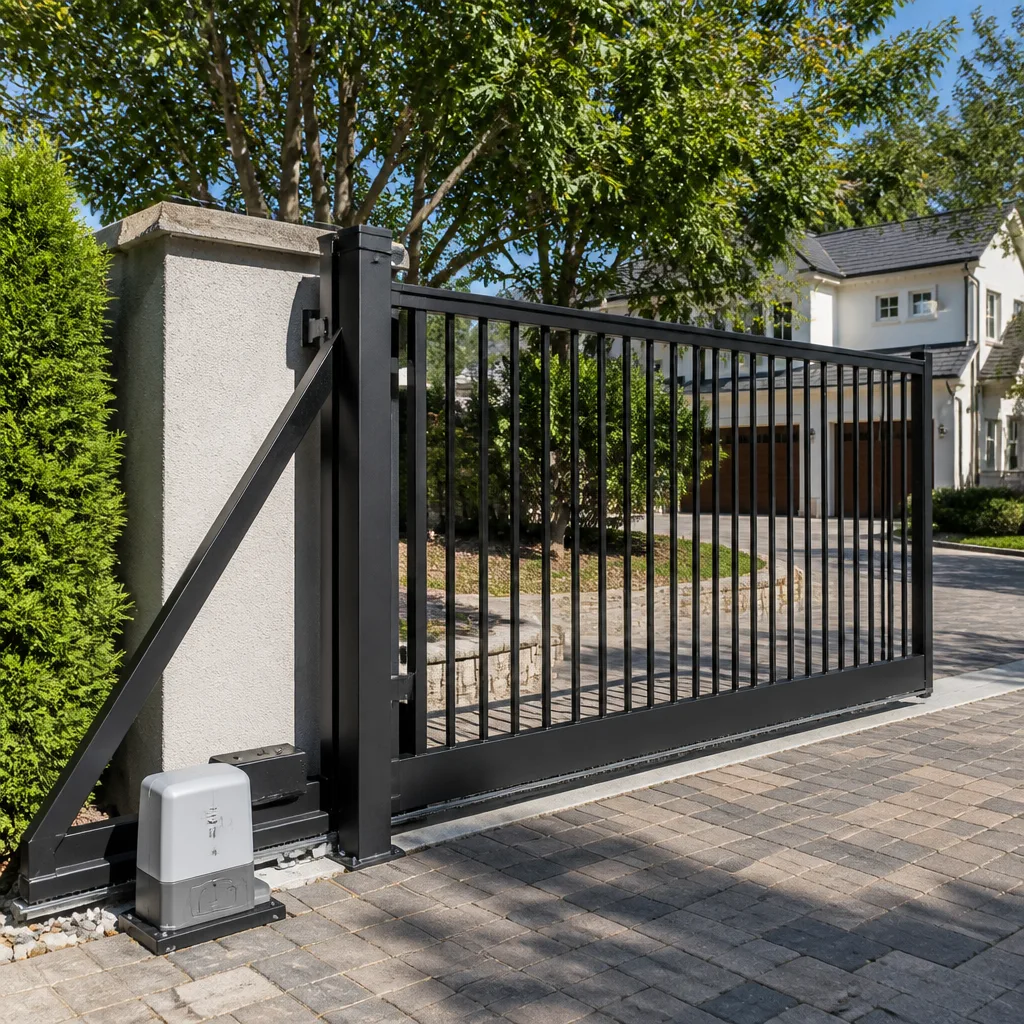
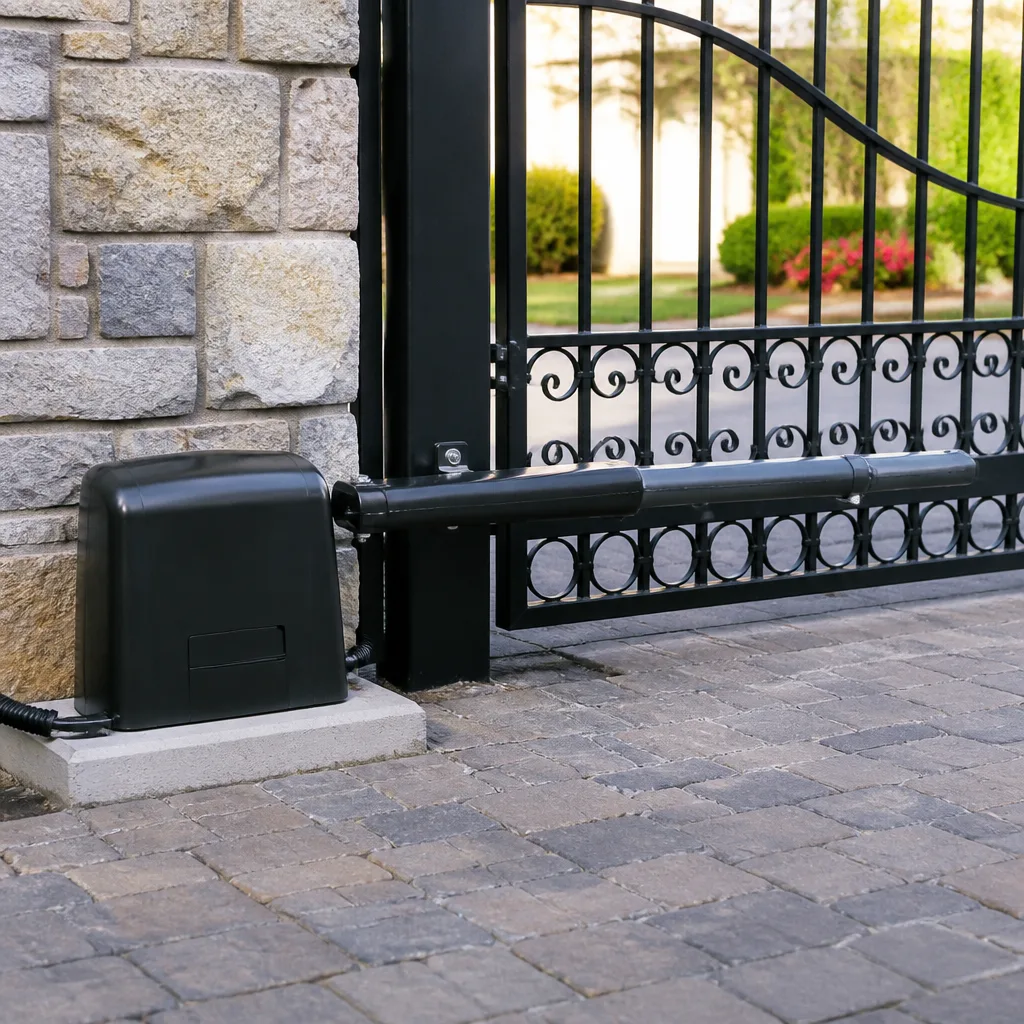
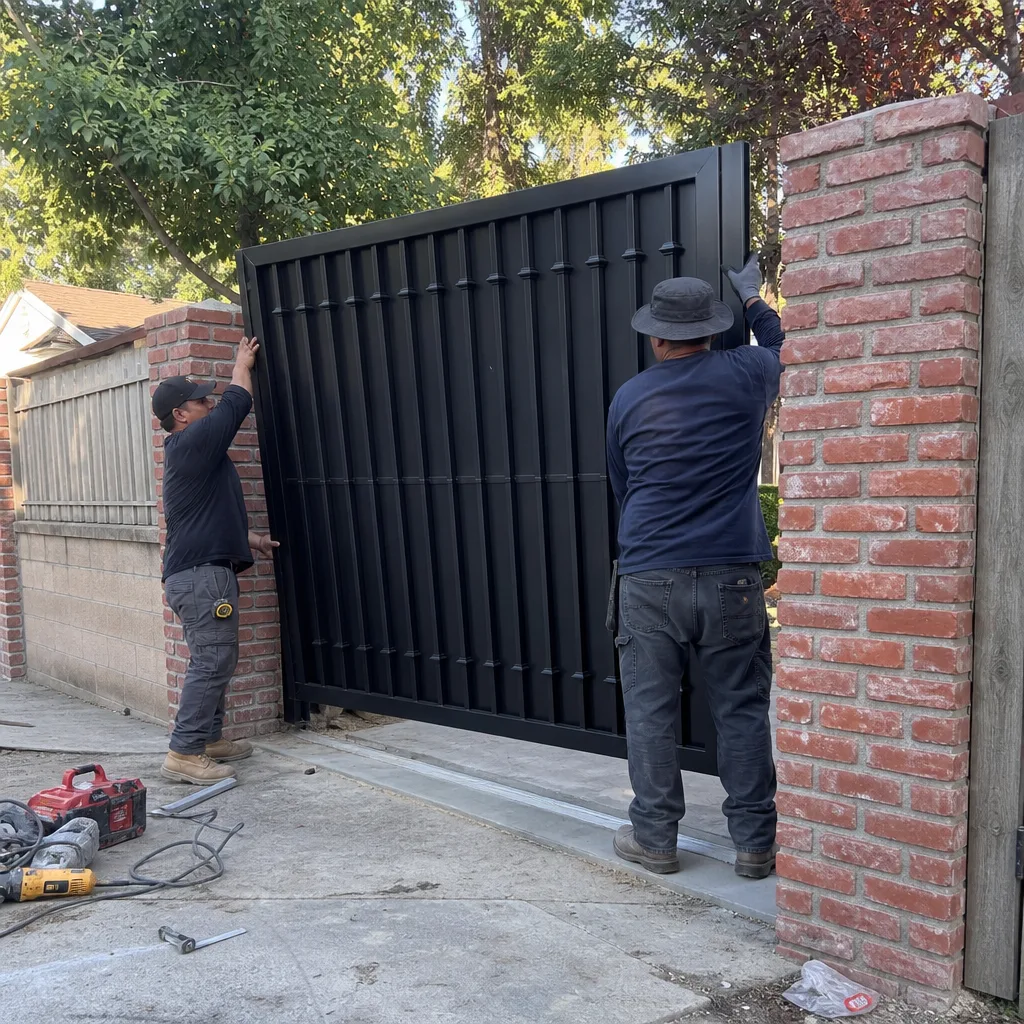
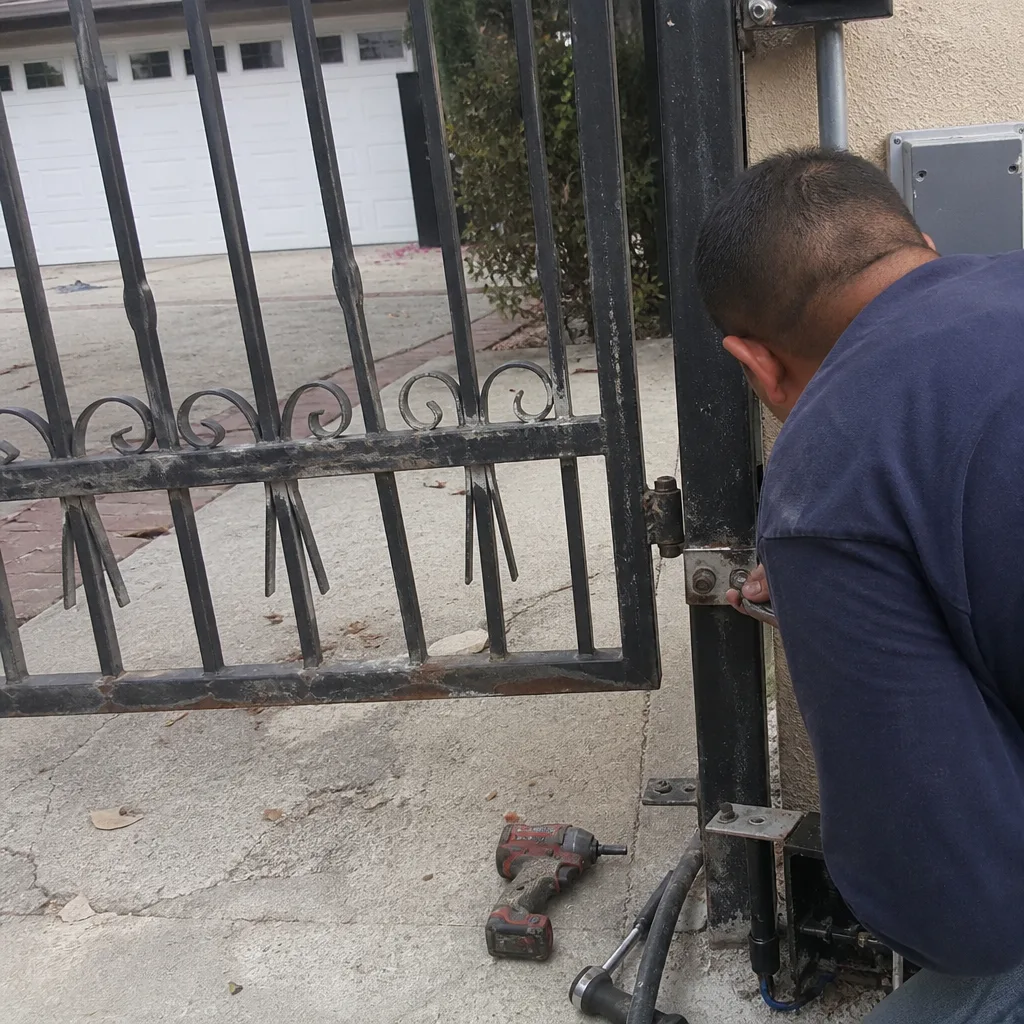 Before
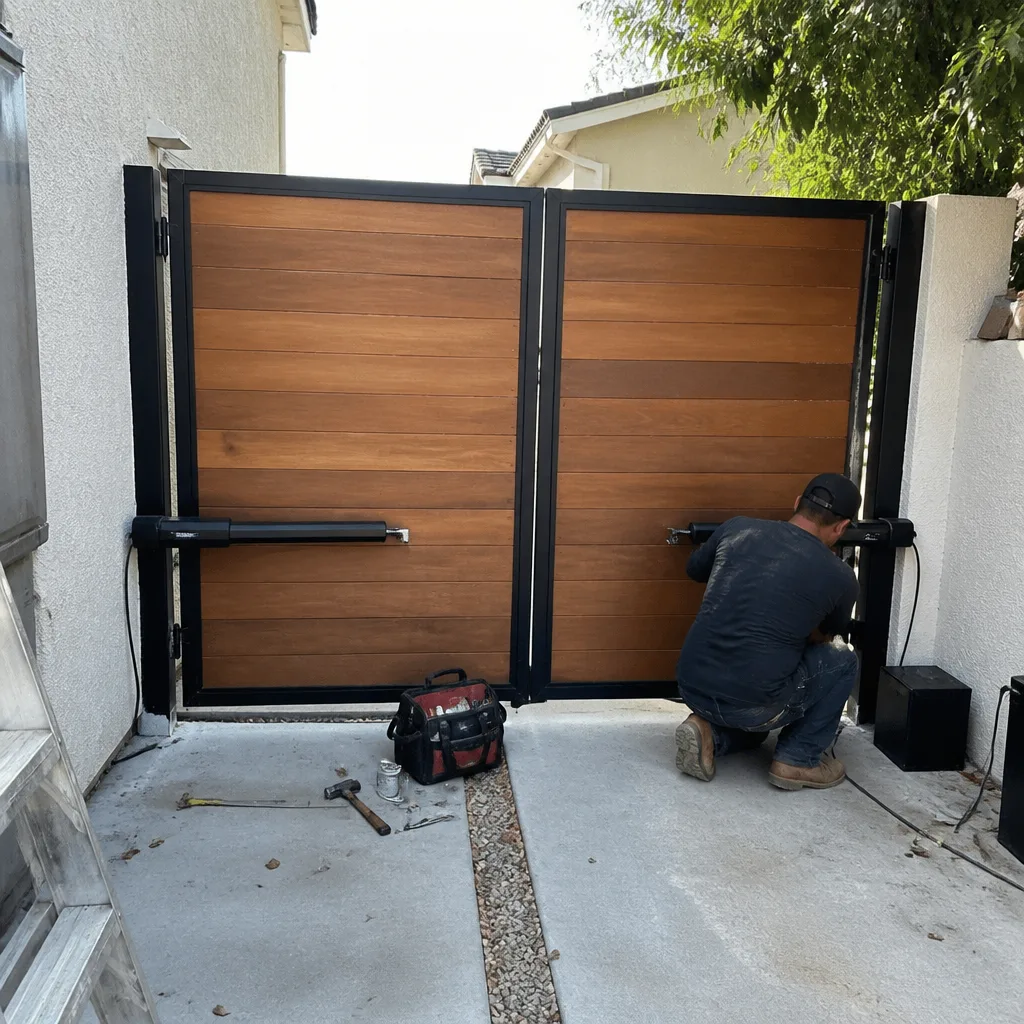 After
After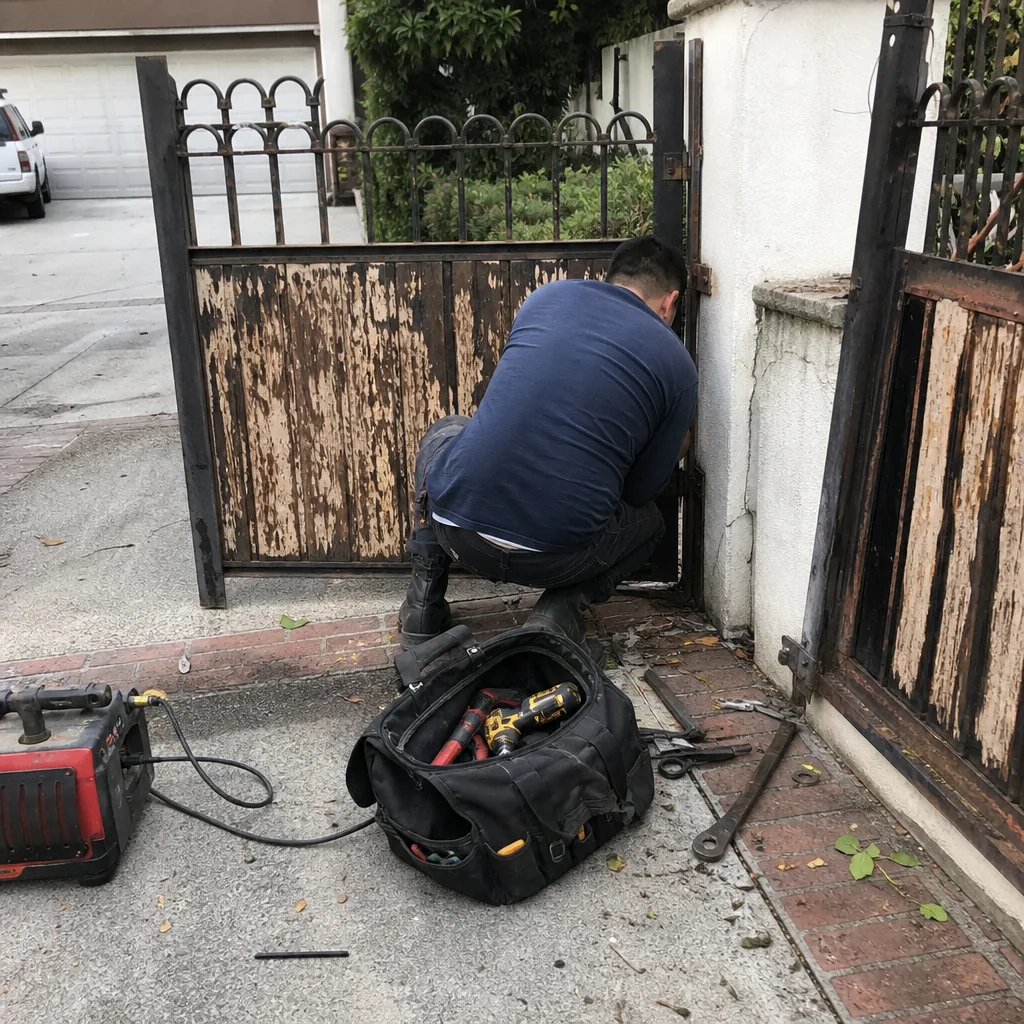 Before
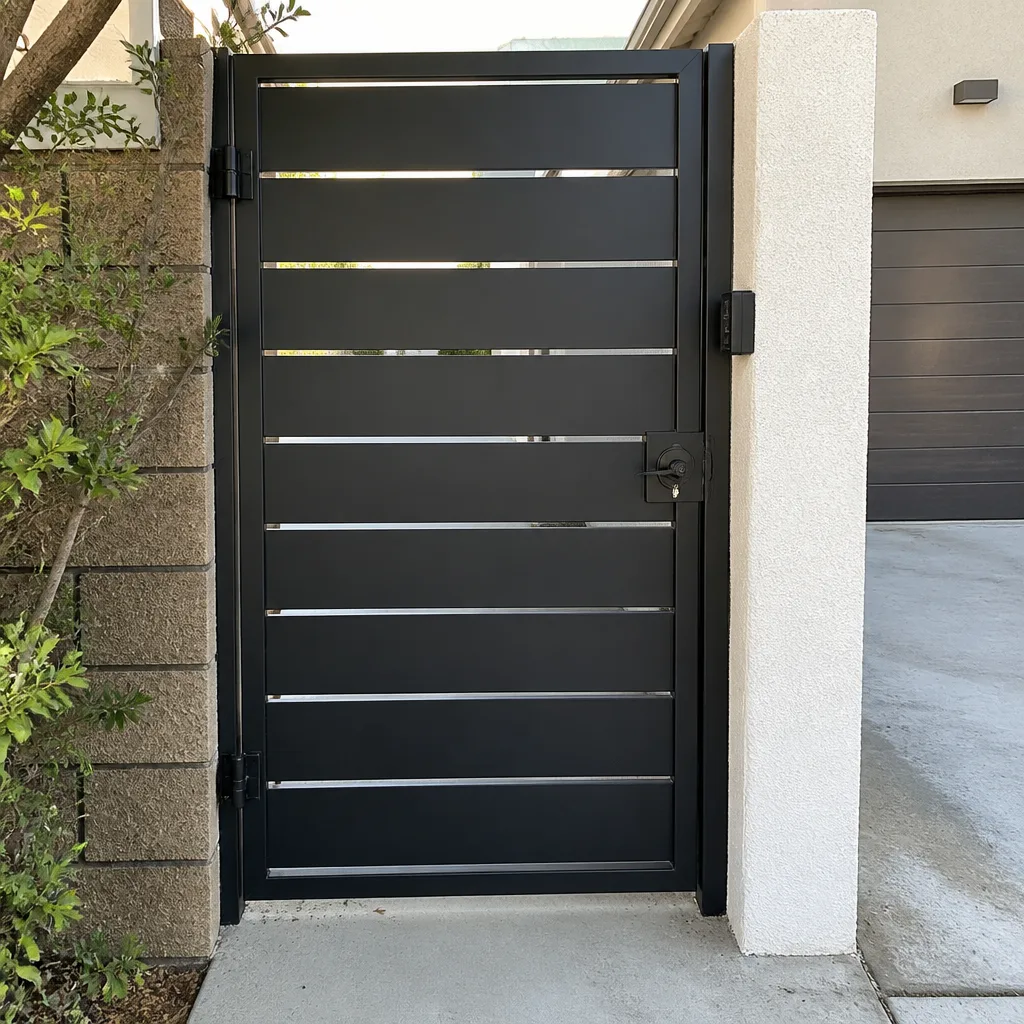 After
After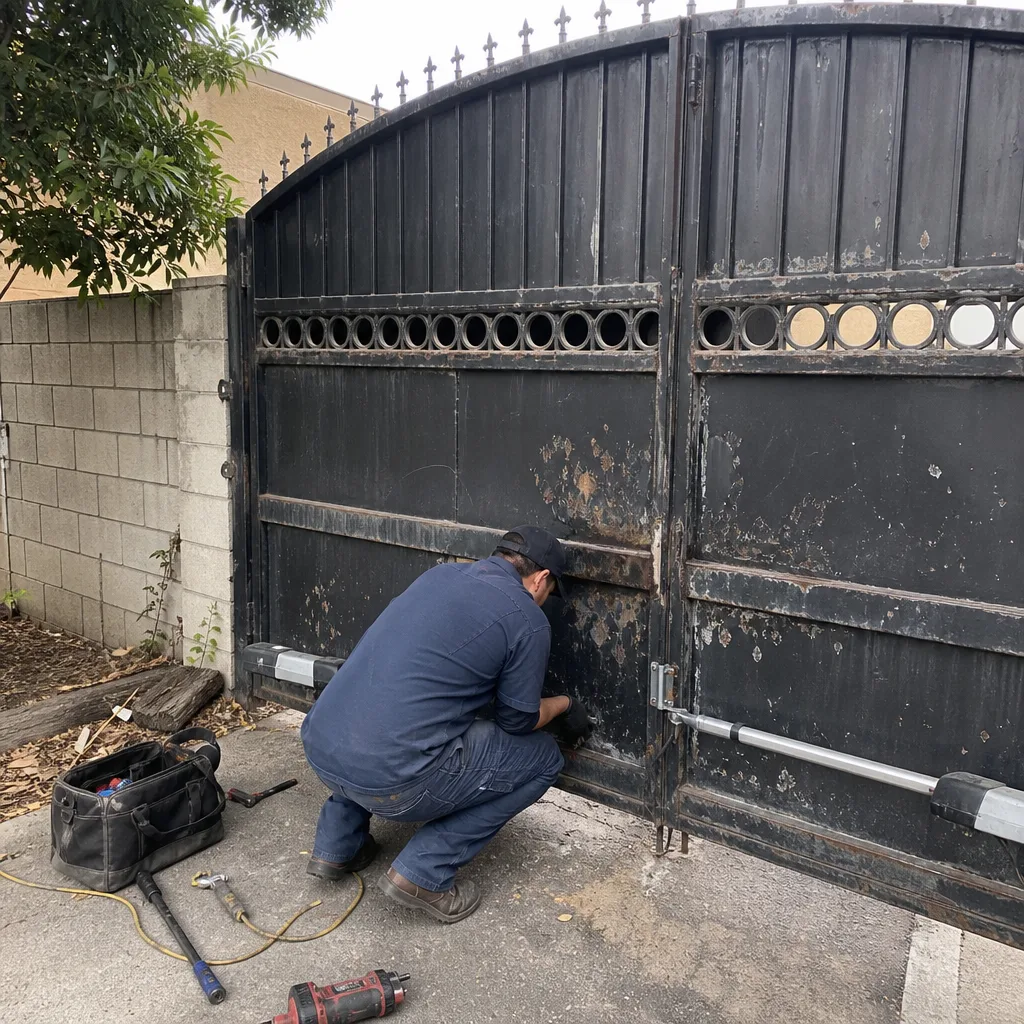 Before
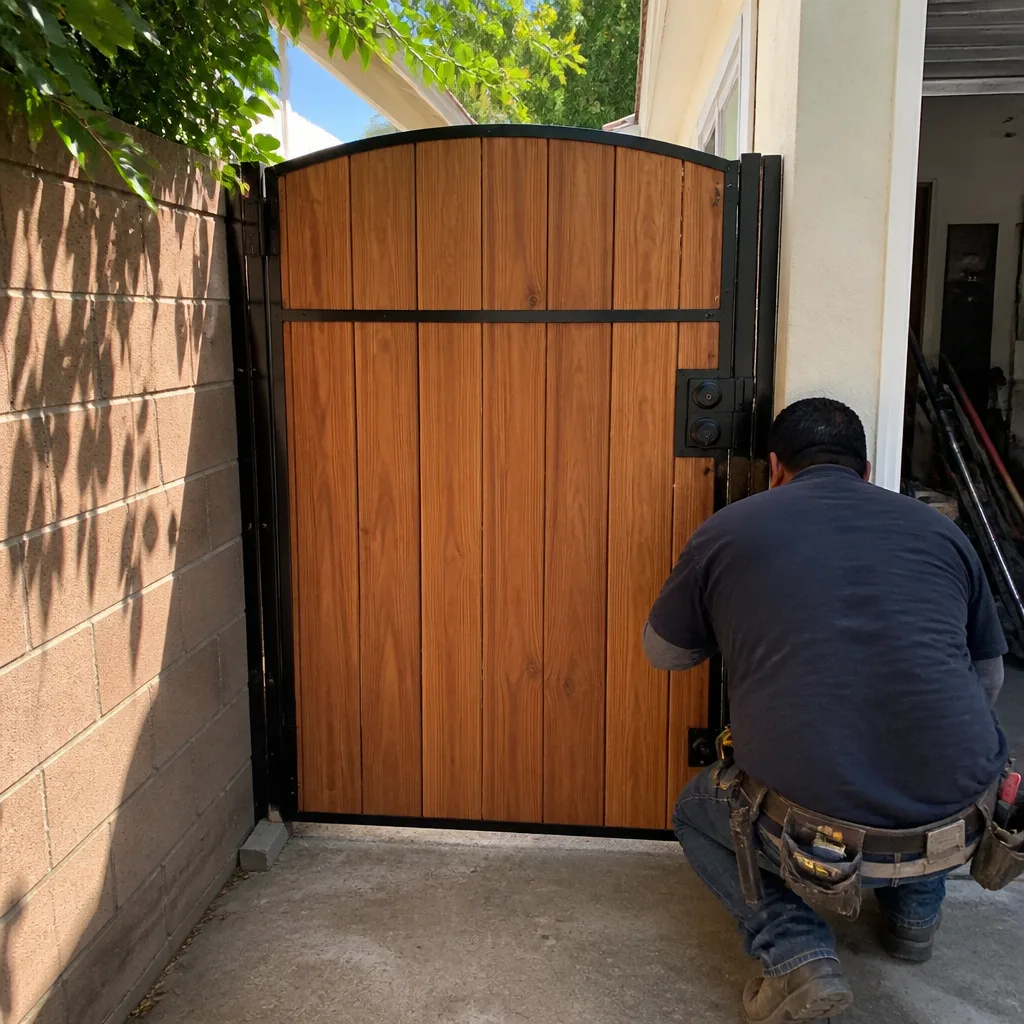 After
AfterGate Repair Warning Signs: A Sherman Oaks Homeowner’s Reference Guide
Most people think a broken gate announces itself. It doesn’t. In twenty-plus years of fixing gates across Sherman Oaks, Van Nuys, and Studio City, we’ve never once been called to a gate that failed without warning. The warnings were always there. They just got ignored because nobody told the homeowner what a dry hinge sounds like, or what a two-second hesitation on the opener actually means. This guide puts names and timelines on those signals. You’ll learn which warnings are cosmetic and can wait, which ones are structural and can’t, and which five sounds tell you exactly what’s about to happen before it does. If you live in Sherman Oaks, this is written for your gates, your weather, and your soil.
Quick Answer
Gate repair warning signs in Sherman Oaks fall into two categories: structural symptoms and nuisance symptoms. Structural symptoms demand action within weeks. These include sag on the latch side, hinge-post lean, a gate that scrapes the ground at the bottom of its swing, and any sound of metal dragging on metal. Nuisance symptoms can wait a month or two. These include light surface rust, faded powder coat, slight cosmetic scratches, and a slow but steady gate opener that hasn’t gotten worse. The distinction matters because fixing a structural issue early typically costs $150 to $400, while waiting for the failure costs $800 to $2,500 and often involves a new post, a new frame, or both.
Table of Contents
- Structural Symptoms vs. Nuisance Symptoms: Know the Difference
- The Five Sounds a Gate Makes When Something Is Wrong
- How to Spot Hinge Fatigue Before Your Swing Gate Drops
- Automatic Gate Operator Warning Signs: Cycle Counts, Hesitation, and Grinding
- Latch-Side Sag: The Warning Sign Everyone Ignores and Why It Predicts Frame Failure
- Safety Sensor Problems: When Your Gate Reverses and What It’s Actually Telling You
- What Sherman Oaks Weather and Soil Do to Gates
- What It Costs to Fix a Warning Sign Now vs. a Failure Later
Structural Symptoms vs. Nuisance Symptoms: Know the Difference
Every gate issue falls into one of two buckets. Getting this wrong is expensive. Getting it right saves you thousands. Here’s the distinction in plain terms: a structural symptom means the weight of your gate is no longer being carried the way it was designed to be. A nuisance symptom means it looks or sounds different but the load path is still intact.
Structural symptoms in Sherman Oaks are more common than homeowners expect because our soil expands and contracts with the rainy season. A fence post set in 2004 in Van Nuys clay has moved, even if only a fraction of an inch. That fraction compounds at the far end of a ten-foot gate. By the time you see the problem, the post has been moving for years.
Structural symptoms: act within weeks
- Sag on the latch side: the gate drops at the unhinged end. This means the hinge post is leaning or the hinges themselves are failing. Not a hinge adjustment. A load-path failure.
- Scraping or dragging at the bottom of the swing path: the gate touches the driveway or pavers at one point and not others. Something has moved. Usually the post.
- A gap that’s wider at the top than the bottom, or vice versa: the frame is racking. That’s metal fatigue or hinge wear and it doesn’t self-correct.
- A hinge post you can move by hand or that has cracks in the concrete collar: the foundation of your entire gate system is compromised.
- Visible rust weeping through paint at a weld joint or hinge point: the metal is failing from the inside out.
Nuisance symptoms: can usually wait 30 to 60 days
- Surface rust on flat panels away from joints: ugly but not structural yet. Sanding and repainting is a weekend project if it’s caught early.
- Faded or chipped powder coat: cosmetic. No safety or structural risk.
- A gate that creaks when it’s dry or hot but moves fine: lubrication issue. Annoying, not urgent.
- Slow opener that’s been slow for years and hasn’t changed: consistent performance, even slow, means nothing is actively declining.
Here’s the test we use on every call in Sherman Oaks: if you can reproduce the symptom on command and it’s related to movement, weight, or a gap, it’s structural. If it only shows up sometimes, only bothers you, or is purely visual, it’s probably a nuisance. When in doubt, take a photo and compare it to a photo from three months ago. Structural problems are always progressive. Nuisance problems are stable. If it’s getting worse, it’s structural, and it’s already spent the comfortable window you had to fix it cheaply.
If you want a second opinion on what you’re seeing, our Sherman Oaks gate repair service includes a free on-site assessment. No charge to look. No pressure to act.
The Five Sounds a Gate Makes When Something Is Wrong
Every gate speaks the same language. After two decades of listening to gates across Sherman Oaks, Encino, and Tarzana, I can usually diagnose a gate from the curb before I’ve touched it. Here are the five sounds that matter, what each one means, how long you typically have to act, and what the repair involves.
1. Metal-on-metal grinding (high-pitched, continuous while moving)
What it means: A hinge pin has worn through its bushing, or the gate frame is rubbing against a post. The lubricant is gone and steel is chewing on steel. How long you have: 2 to 6 weeks of regular use before the hinge pin snaps or the post channel wears so thin the gate drops. What the repair involves: New bushings, re-boring a hinge barrel, or welding a wear plate. Usually $200 to $450 per hinge depending on access and gate weight. If you catch it before the pin locks up, it’s a same-day job.
2. A chirp that repeats at regular intervals (not while moving, but steady)
What it means: This is not the gate structure. It’s the operator. On LiftMaster, FAAC, and Elite units, a repeating chirp or beep is a diagnostic code, not a mechanical sound. It usually indicates a bad battery, a failing capacitor, or a control board losing its settings. How long you have: The chirp is the early warning. The operator usually quits entirely within 2 to 8 weeks. What the repair involves: Battery replacement on DC units is a $200 to $400 fix. A control board is $450 to $900. The chirp is doing you a favor. Calling at the chirp stage is the difference between a battery and a board.
3. A sharp crack or pop when the gate starts moving
What it means: A weld has broken. When a weld snaps at a hinge point, it makes exactly one violent sound and then the gate keeps moving but is now hanging on half the surface area it was designed for. How long you have: Hours to days, not weeks. If the weld broke under the gate’s own weight, the remaining welds are carrying double. They will follow. What the repair involves: Grinding out the old weld, re-welding with proper penetration, and usually adding a gusset plate for strength. We do this on-site in your driveway. Most single-weld repairs run $250 to $500. Wait for the second weld to pop and you’re re-hanging the entire gate and possibly replacing the post. $800 to $1,800.
4. A rhythmic thump or clunk at the same point in every cycle
What it means: Something is hitting something at a specific point in the travel. The gate wheel is running over a broken paver, the bottom rail is tapping a high spot in the concrete, or the gate frame is twisting and tapping the post at one point. How long you have: Weeks to months, but every cycle is making it worse. The repetitive impact is working the joints loose. What the repair involves: If it’s a wheel or ground clearance issue, it’s an adjustment or wheel replacement at $150 to $350. If the frame is twisting, that’s structural and requires a frame alignment and often post work. $500 to $1,200. Either way, the thump is a metronome counting down.
5. A low, guttural groan that’s gotten louder over months
What it means: This is the hinge post losing its grip on the ground. The post is moving in its concrete or the concrete collar is cracking and the post is working the void bigger each cycle. The groan is the sound of steel grinding against stone and broken concrete. How long you have: 3 to 12 months, but it is not going to hold. What the repair involves: Digging out the old collar, re-setting the post in fresh concrete with proper depth, and re-hanging the gate. $700 to $1,500 depending on post size and gate weight. This is the single most common major repair we do in Sherman Oaks, because post movement in clay soil is relentless.
One note worth making: a gate that squeaks only when it’s dry and hot is usually a lubrication issue, not a mechanical one. A gate that grinds every single time regardless of weather is mechanical. Squeaks are oil. Grinds are metal.
How to Spot Hinge Fatigue Before Your Swing Gate Drops
Hinges don’t fail suddenly. They fail the same way a rope frays: strand by strand, silently, over months. And the visual tells are right there if you know what you’re looking for. Here’s the sequence we’ve documented on literally hundreds of swing gates in Sherman Oaks and the Valley.
Stage 1: The paint shadow
Every hinge has a pinch point where the barrel rotates around the pin. When a hinge starts wearing, the barrel shifts just a hair, and you’ll see a fine black dust or a dark line appearing at the top of the barrel where there was none before. That’s powdered metal, not dirt. Wipe it off and it comes back within a day or two. This is the earliest signal. You’re still 3 to 6 months from failure at this point, and the repair is still just hinge barrel work or a pin replacement rather than a full hinge swap.
Stage 2: The oval shadow
Look at the hinge barrel from the side, at eye level. On a healthy hinge, the barrel sits perfectly circular around the pin. On a wearing hinge, the hole becomes an oval, widest at the top where the load concentrates. You’ll see the pin listing to one side like a tired soldier. The gate still works fine. You have 1 to 3 months. This is the last affordable repair window.
Stage 3: The rise and drop
Open the gate halfway and grab the end of it. Lift. On a healthy swing gate with proper hinges, there should be zero vertical movement. Maybe a sixteenth of an inch if you really strain. If the gate lifts a quarter inch or more and drops with a click, the hinge barrels are so worn that the gate is effectively riding on the pins like clothes hangers on a rod. You have weeks, not months. At this point you’re usually replacing both hinges and often the hinge post inserts as well.
Stage 4: The drag mark
The gate starts polishing the concrete at the bottom of its arc. You’ll see a crescent of smooth concrete where the gate has been kissing the ground. By the time there’s a visible drag mark, the gate has dropped a full half inch or more, and we’re now dealing with a structural realignment, not just a hinge replacement. The hinge didn’t fail alone. The post often moved with it. This is the $1,000 stage. Stage 1 was the $200 stage.
The fix at Stage 1 is a couple hours of work. At Stage 4 it’s a day or two and sometimes involves a new post. The hinge itself gave you six months of warnings. The trick is knowing what a healthy hinge looks like before it fails. For a tutorial on what properly set hinges should look like, see our guide to gate installation in Sherman Oaks. The standards we build to are the standards your existing gate should have been built to.
Automatic Gate Operator Warning Signs: Cycle Counts, Hesitation, and Grinding
Automatic gate operators are the most misunderstood part of any gate system. Most people hear a sound, assume age, and keep pressing the remote until the thing quits. But operators give clearer warnings than the mechanical gate does. You just have to know what a cycle count is and why it matters.
The cycle count behavior that predicts failure
Every automatic gate opener is rated for a certain number of cycles per day and a total cycle life. A residential LiftMaster or FAAC unit is typically rated for about 20 to 30 cycles per day. If your gate opens 60 times a day because you’re in Sherman Oaks with kids coming and going, deliveries, dog walkers, and visitors, the operator is aging at double or triple its design rate. The warning sign isn’t a noise. It’s the unit giving up at odd times: a sluggish start on hot afternoons, a slower cycle on the third open in a row, a remote that only works from closer than it used to. That’s a motor with worn brushes and fading capacitor draw. Not a programming issue. A wear issue.
Hesitation on open
You press the remote. Nothing happens for a full second. Then the gate starts. That delay between command and movement is the single most reliable early indicator of capacitor failure on swing-arm operators and linear ram operators. The capacitor is buried in the control board and it’s the component that gives the motor its starting kick. When it’s failing, the gate hesitates like a car with a fading battery. Homeowners in Sherman Oaks tell us their gate “stutters” or “is slow to wake up.” That’s the capacitor. If replaced at the hesitation stage, it’s a $250 to $450 board-level repair on most Mighty Mule, Elite, and FAAC units. If left alone, the motor starts drawing high current to compensate, which cooks the control board and eventually the motor itself. That’s a $900 to $1,600 operator replacement.
The grinding that most people think “just needs grease”
On chain-drive operators and rack-and-pinion slide gates, grinding is almost never a lubrication issue. It’s a sprocket wearing against a loose chain, a rack gear skipping teeth on a worn pinion, or a gearbox that’s lost its oil and is chewing its own reduction gears. Greasing a skipping gear makes it worse, because the grease holds the metal particles in suspension and turns the gearbox into sandpaper. If a chain-drive operator sounds like a cement mixer, the gearbox is already failing. Depending on the model, a gearbox rebuild runs $350 to $700. A full operator replacement runs $800 to $1,500. The one that got grease instead of a gearbox is the one that locks up mid-cycle with a car half in the driveway.
For what it’s worth, LiftMaster and FAAC units have diagnostic LEDs and audible codes for most of these failures. Your owner’s manual documents them. Try counting the blinks. But even without a manual, the heuristic holds: hesitation is electrical, grinding is mechanical, and neither of them gets better with spray lube. If you’re in the Sherman Oaks area and your opener is making sounds you can’t identify, our gate motor and opener service diagnoses on-site. We’re certified on LiftMaster, FAAC, BFT, Linear, Viking, Ghost Controls, DoorKing, Elite, and Mighty Mule units, and we carry parts for most of them in the truck.
Latch-Side Sag: The Warning Sign Everyone Ignores and Why It Predicts Frame Failure
Here’s the gate symptom nobody calls us about until it’s too late. The gate sits a half inch low at the latch end. It still closes. The latch still catches, though sometimes you have to give it a little lift. It’s been like that for a year. It’s fine. No, it isn’t.
Latch-side sag is the single most reliable predictor of full frame failure within 18 months. We’ve documented this pattern on gates across Sherman Oaks, Studio City, and North Hollywood and it holds with alarming consistency. Here’s the mechanism.
A swing gate is a lever. The hinge post carries the entire weight of the gate at the hinge point. The latch post carries none of the weight. It only catches the gate at the end of its travel. When a gate sags on the latch side, the hinge post is leaning or the hinges are elongating, and the gate is now hanging lower at the far end than it was designed to. That low position doesn’t just look sloppy. It does three things.
- It overloads the latch hardware. Instead of sliding cleanly into the catch, the latch bar now enters at an angle. Every close cycle scrapes, wedges, and twists the latch mechanism. The latch post starts taking load it was never designed for.
- It puts torsional stress on the gate frame. The frame is being twisted along its long axis every time the gate hangs open, loading and unloading the bottom corner welds. Weld fatigue follows.
- It accelerates hinge wear. Because the gate is already out of plane, the hinges are binding on every cycle, wearing the barrels faster, which allows more sag, which binds the hinges more. It’s a feedback loop and it does not self-correct.
The 18-month timeline comes from our repair records. A gate with a visible half-inch latch-side sag today, left alone, will typically show weld cracks at the corner joints within 6 to 10 months, and the latch post will be leaning and the frame visibly racked within 18. At that point the gate can’t be economically repaired. It’s a re-hang with a reset post and often a new frame. $1,200 to $2,200. A latch-side sag caught early is a hinge adjustment or hinge replacement and a close-cropped post alignment. $300 to $600.
Here’s the tell that separates a hinge wear sag from a post movement sag. Hinge wear sag exists only at the latch end. The gate at the hinge end stays tight to the post. Post movement sag shows as a widening gap at the top or bottom of the hinge end. If you see a gap, it’s the post. If you only see the drop at the far end, it’s the hinges. Either way, fix it now. The name of the game in Sherman Oaks is cheap now or expensive later, and there is no middle option.
Safety Sensor Problems: When Your Gate Reverses and What It’s Actually Telling You
A gate that reverses unexpectedly is the one that sends the most homeowners to the internet, because from the outside it looks like a mechanical failure. It isn’t. Your gate is, in most cases, doing exactly what it was designed to do.
Automatic gate operators in Sherman Oaks are required by state code to have a safety device on the closing edge: a photoelectric eye, an edge sensor, or a current-sensing clutch that detects resistance and reverses the gate. When your gate closes halfway and then cycles back open, the operator is not broken. It is receiving a signal from one of these safety devices that something is in the way. The device is either misaligned, dirty, or genuinely blocked.
The dangerous move is not calling someone. The dangerous move is the homeowner who decides the sensor is annoying and disconnects it. A sensor that has been unplugged because it was “malfunctioning” is a gate that can no longer tell the difference between a child and a breeze. Every year, we repair gates in Sherman Oaks where a previous owner or a handyman bypassed a safety sensor because it kept causing false reversals. The gate worked fine until it didn’t. A gate without a safety sensor reverses on nothing, which means it closes on everything.
Here’s the correct way to handle a reversing automatic gate.
- Check for measurable obstruction first. Look at the photoelectric eye. Is it dirty? Is a plant leaf hanging in front of it? In Sherman Oaks, bougainvillea and ivy are the two most common natural causes of sensor trip. Trim them back much further than you think you need to. The growth cycle will have them back in front of the sensor within weeks.
- Check for alignment. Photoelectric eyes need line of sight between the transmit and receive units. A bump from a trash can, a trimmer, or a delivery truck vibration can knock one out of alignment by a quarter inch. Realign them so they face each other squarely.
- Check the edge sensor strip. On gates with a rubber edge sensor, run your hand along the full length of the pressure strip. A hard spot, a cut, or a section that doesn’t deform means the sensor has been pinched or damaged and is sending a constant fault signal.
- Check the clutch tension on chain-drive units. A chain-drive operator that reverses under no load is often a torque clutch that’s been adjusted too loose. This is a set-screw adjustment on the gearbox, not a repair, but if you’re not sure, don’t guess. An over-tightened clutch removes the safety function. The whole point of the clutch is to slip when something is in the way. Set it too hard and you’ve disabled the safety device just as surely as unplugging the sensor.
The honest math on sensor work in Sherman Oaks is this: about half the sensor repair calls we get are dirt, growth, or alignment and are solved in under 20 minutes. The other half are damaged edge sensors or failed photoelectric eyes and run $150 to $400 in parts and labor. If your gate is reversing and you can’t quickly spot the cause, call us. We’ll tell you over the phone what’s most likely, and we’ll check it in person for free if it’s not fixed by a phone walk-through. The Gatewood Fence & Gate home is in the Valley, not three states away. The person who answers is the same person who will show up.
What Sherman Oaks Weather and Soil Do to Gates
Gates don’t fail the same way everywhere. A gate in Phoenix fails from sun damage and embrittlement. A gate in Seattle fails from moss, rot, and constant moisture. A gate in Sherman Oaks fails in a specific pattern, and once you understand it, the warning signs make way more sense.
Sherman Oaks sits on what used to be seasonal wetland before the Valley was built out. The soil is a mix of sandy loam, clay lenses, and alluvial deposits washed down from the Santa Monica Mountains. When it rains in the winter, the clay expands and pushes. When the Santa Anas blow through in October and the ground dries out for eight months, the clay contracts and pulls. Concrete post collars set in this soil are in a constant push-pull cycle. Things don’t sink evenly in Sherman Oaks. They lean. The lean is almost always toward the drier side of the yard, which is usually the south or west exposure.
The climate does the rest. We don’t get enough rain to keep wood saturated, so redwood and cedar gates last longer here than on the coast. But we get fierce UV, especially on south-facing gates, which breaks down paint and powder coat faster than people expect. A south-facing black gate in Sherman Oaks can hit 160 degrees in August. The thermal expansion makes the metal grow, then contract overnight. Over years, that daily cycle stresses welds and loosens hardware in ways the same gate in a milder climate wouldn’t experience.
What this means for your warning-sign reading: if your gate sits on the south or west side of your home in Sherman Oaks, expect post movement and hinge wear sooner than your neighbor whose gate faces north. Expect paint failure at 5 to 8 years instead of 10 to 12. Expect gate sag on the latch side as the default first symptom. And if you’re buying a house with an existing gate, these are the exact things to look at. A gate that’s been properly set and maintained in Sherman Oaks will last 20 to 30 years. One that’s been fighting the soil and sun will show warnings by year 5.
None of this means you need to be a soil scientist. It means when you see a warning sign, take it seriously. The environment we live in is actively working against gate foundations, and the warnings are the gate’s way of asking for help before the soil wins.
What It Costs to Fix a Warning Sign Now vs. a Failure Later
The entire point of learning warning signs is to move from expensive reactive repair to cheap proactive repair. Here’s the honest pricing of catching it early versus waiting for the failure, based on what we see on Sherman Oaks driveways every week.
Early warning stage pricing (now)
- Hinge wear, early stage, no sag yet: $200 to $400 for barrel rebush or hinge pin replacement
- Latch-side sag caught before weld cracks: $300 to $600 for hinge replacement and post alignment
- Operator capacitor failure at hesitation stage: $250 to $450 for capacitor and board inspection
- Safety sensor cleaning and alignment: $0 to $150, often resolved over the phone or with one service call
- Chain slack adjustment on chain-drive slide gate: $100 to $250
Post-failure pricing (later, usually 6 to 18 months later)
- Broken hinge pin and dropped gate: $600 to $1,200, plus paintwork and often post reinforcement
- Latch-side sag progressed to weld cracks and frame rack: $1,200 to $2,200 for frame re-weld, post reset, and gate re-hang
- Failed operator motor and board after ignored capacitor: $900 to $1,600 for full operator replacement
- Gate closed on vehicle after disabled safety sensor: $2,000 to $5,000 for gate repair, sensor restoration, and often vehicle bodywork. The gate repair is the cheap part.
- Full post replacement after soil movement went unchecked: $700 to $1,500 for excavation, concrete, and post reset
The pattern is consistent: every dollar spent at the warning stage saves three to five dollars at the failure stage. The gate is telling you the same thing every time. The question is whether you’re listening.
And for transparency, because our clients in Sherman Oaks have told us more than once that they were burned by a previous company that quoted one price on the phone and charged another at the door: we give a written price before any work starts. The price we quote is the price you pay. No surprises, no “we discovered this once we opened it up” upcharge. If we find something else while we’re in there, we’ll show you, explain it, and quote it separately before touching it. That’s the way we’ve done it since 2001, and it’s why people in Sherman Oaks send their neighbors to us.
Common Mistakes to Avoid
- Unplugging the safety sensor because it keeps reversing. The sensor isn’t broken; it’s doing its job. Unplugging it disables the one system designed to prevent serious injury and property damage. We’ve seen car doors ripped off by a gate that reversed on nothing, because the sensor had been “temporarily disconnected” by the homeowner. The sensor gets fixed. The car door doesn’t.
- Spraying WD-40 on everything that squeaks. WD-40 is a solvent, not a lubricant. It washes away whatever grease is left and then evaporates. For hinges, use a heavy oil or a synthetic grease. For chain drives, use a chain-specific lubricant. For gearboxes, nothing you spray on the outside will help. The issue is inside.
- Adjusting the clutch “a little tighter” to stop false reversals. The clutch is not a minor annoyance to be tuned away. It’s a safety device. Setting it too tight turns the operator into a machine that will not stop for anything, including you.
- Ignoring a latch-side sag because “it still closes.” The latch catching doesn’t mean the gate is healthy. It means the gate is still functioning despite a structural failure that’s already underway. The sag is the warning. The latch catch is just the last accommodation before the drop.
- Pouring a new concrete slab over a moving post to “stabilize” it. Concrete poured over an already-leaning post doesn’t stabilize anything. It locks the post into its current wrong position and makes the eventual repair much more expensive because now the post has to be cut out of the new slab.
- Assuming the gate is “fine” because it’s only a few years old. In Sherman Oaks, a gate that’s been improperly set or built with substandard hinges can show warning signs by year 3 and fail completely by year 6. Age is not the same thing as condition. The warning signs are.
- Refusing to replace a hinge that’s “only” worn because the other hinges look okay. Hinges age together. When one fails, the others are usually trailing it by months. Patching a single hinge rarely saves money in the long run. We replace what needs replacing, but we’ll always tell you honestly which hinges are on borrowed time.
When to Call a Professional
Some gate work is genuinely DIY-capable: lubrication, cleaning, painting, trimming back plants, tightening hardware. Other work requires tools, experience, and judgment. Call a professional if your gate shows any structural warning sign: latch-side sag, post lean, a widening gap at the hinge end, a broken weld, or a grinding hinge. Call if your automatic opener hesitates, chirps, grinds, or reverses repeatedly. Call if your safety sensor isn’t working. And call if you’ve already tried the DIY fixes and the symptom persists. Gates are heavy, pre-loaded systems. The energy stored in a tensioned chain drive or a rusted counterweight is enough to do real damage. Gatewood Fence & Gate offers free estimates in Sherman Oaks. Call (818) 873-5061. A live person answers, and the person who shows up is the person you spoke to.
Frequently Asked Questions
A gate needs repair if the structural frame is sound, the posts are solid, and the failure is in a replaceable component like a hinge, operator, sensor, or latch. It needs replacement if the frame is rusted through, the posts are cracked or leaning beyond correction, or the weld joints are failing in multiple places. In our experience, about 70% of the gates customers ask us to replace can actually be repaired on-site for a fraction of the replacement cost. That’s the whole philosophy at Gatewood Fence & Gate: fix what’s fixable, replace only what’s spent.
A gate that reverses when the path is clear is receiving a false signal from a safety sensor. The most common causes are dirty or misaligned photoelectric eyes, a pinched or damaged edge sensor, or a torque clutch set too loose on a chain-drive operator. Check for dirt and plant growth first, then alignment. If it persists, call us and we’ll walk you through a diagnosis on the phone. Most sensor issues in Sherman Oaks are either growth-related or alignment-related and don’t require parts.
A properly installed residential gate motor in Sherman Oaks lasts 10 to 15 years with regular maintenance of the chain or belt tension, sensor alignment, and gearbox lubrication. One that’s run 60 or more cycles a day on a heavy gate with no maintenance typically lasts 5 to 8 years. The cycle count is a stronger predictor than the calendar age. The warning signs of an aging motor are hesitation on start, slower travel over time, and intermittent remote range loss.
Almost everything we do is on-site. We weld on-site, re-set posts on-site, replace hinges and operators on-site, and rebuild frames on-site. The gate stays in your driveway. We only remove a gate when the frame needs bench-level straightening or powder coating, and even then we haul it back and re-hang it ourselves. For more on how we work, see our pages on gate repair in Sherman Oaks and gate installation in Sherman Oaks.
Hinge replacement with post realignment. We see it more than every other repair combined. Sherman Oaks soil moves, gates lean, hinges wear, and the gate drops at the latch side. The fix is usually two new hinges, a post alignment, and a close-cropped re-hang. It’s the single most predictable repair in this market, which is exactly why the early warning signs are so worth knowing.
In most cases, yes. We keep our schedule responsive for Sherman Oaks and the surrounding Valley, and a live person answers the phone 24 hours a day. If it’s a structural failure with a gate stuck open or closed, we’ll prioritize it. Call (818) 873-5061 and we’ll give you an honest arrival window and a free estimate before any work starts. Call today, and we’ll tell you exactly what the gate is doing and what it needs.
The Bottom Line
Request a Free Estimate in Sherman Oaks
Tell us what you need - Gatewood Fence & Gate responds fast. No obligation.