
Last updated August 26, 2026
Free on-site gate assessment - hinges, posts, and your LiftMaster or Nice gate operator checked before anything is quoted
The assessment is free and the quote is the invoice.
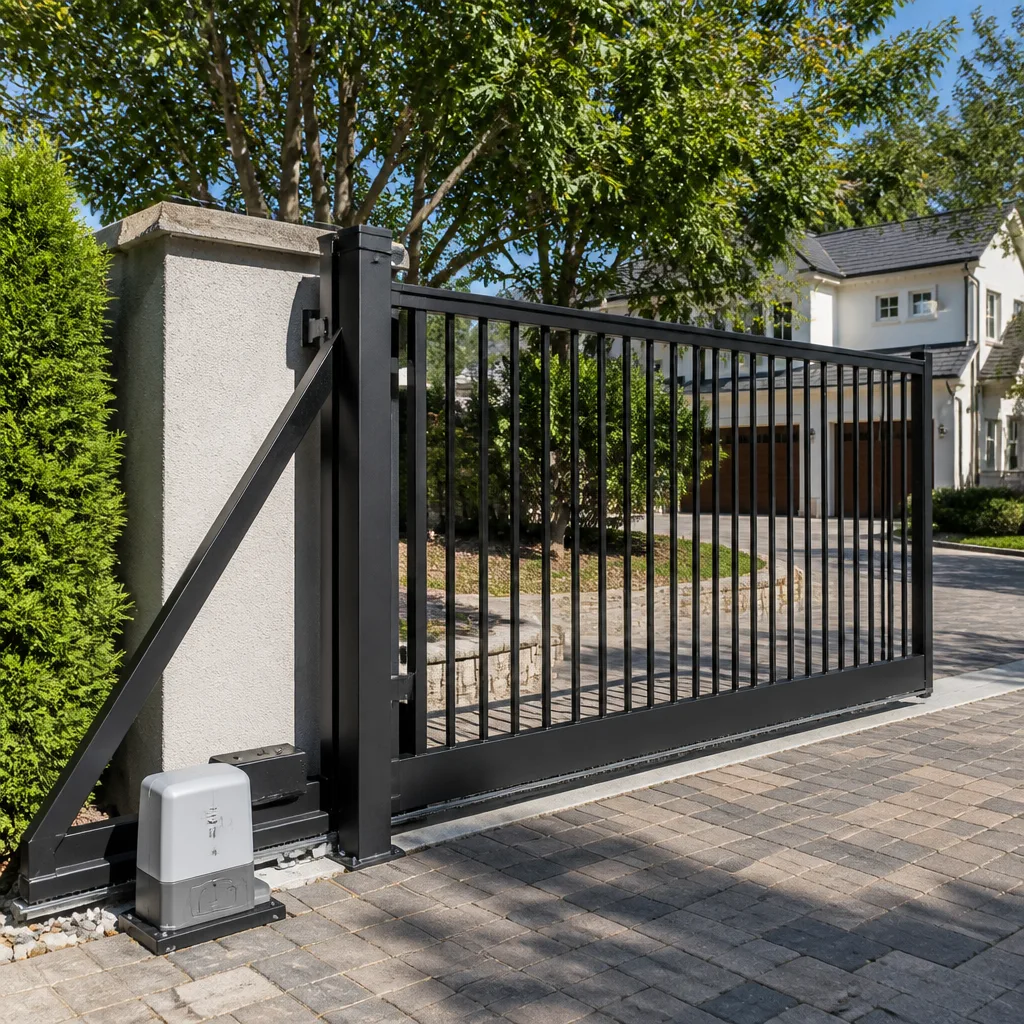
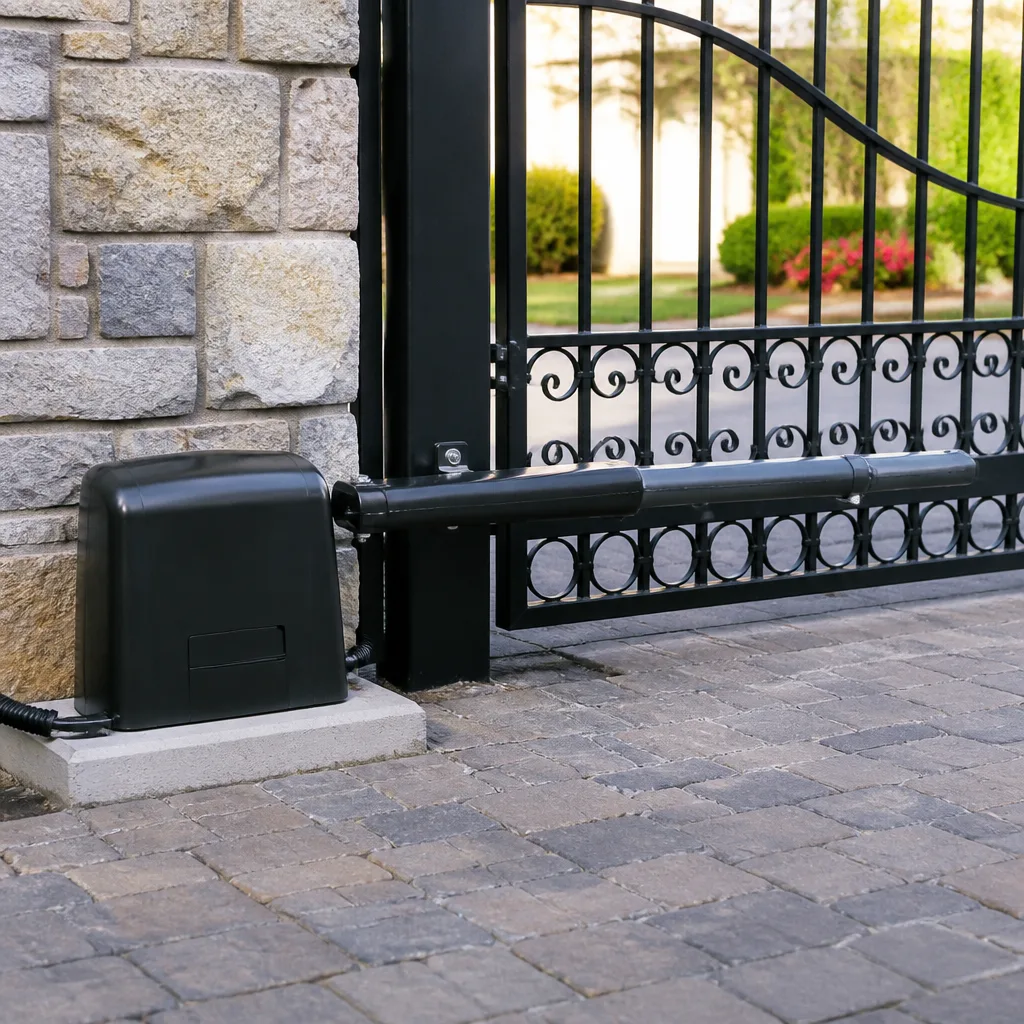
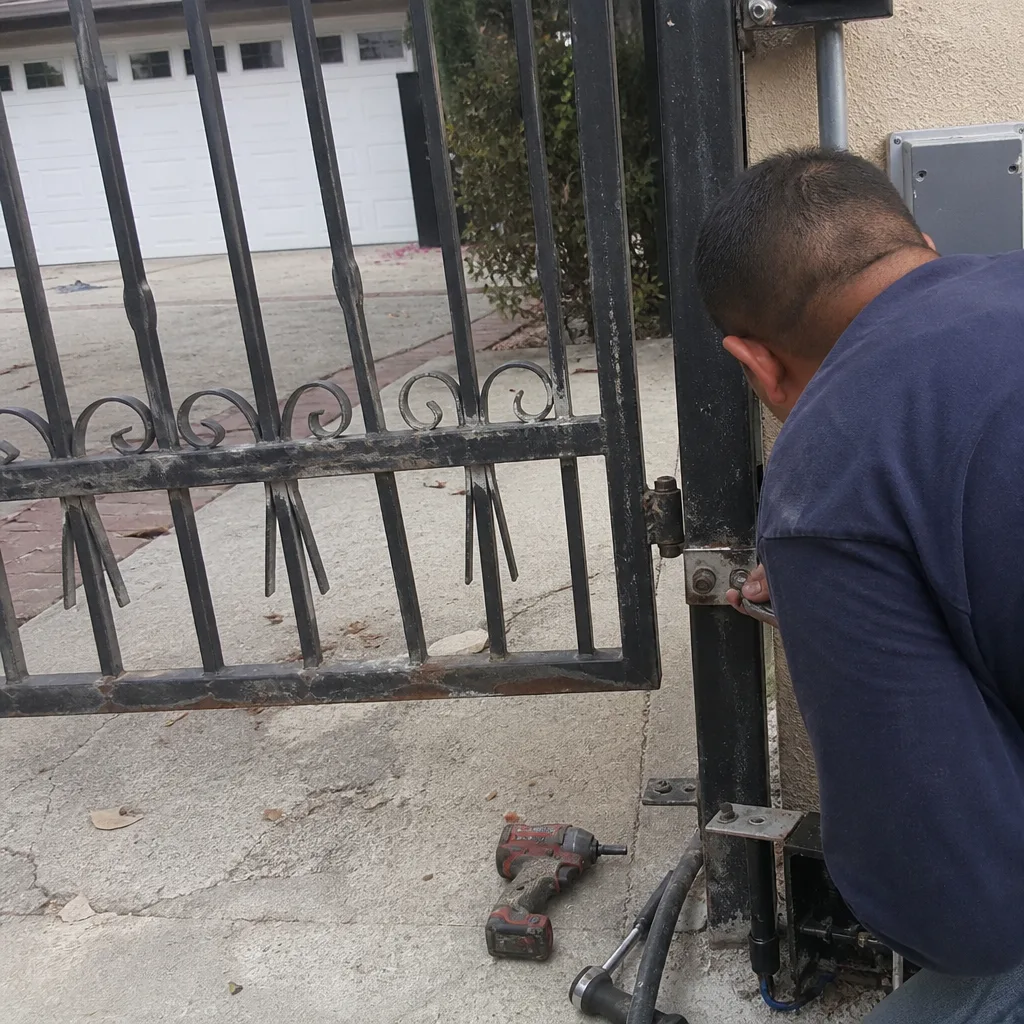 Before
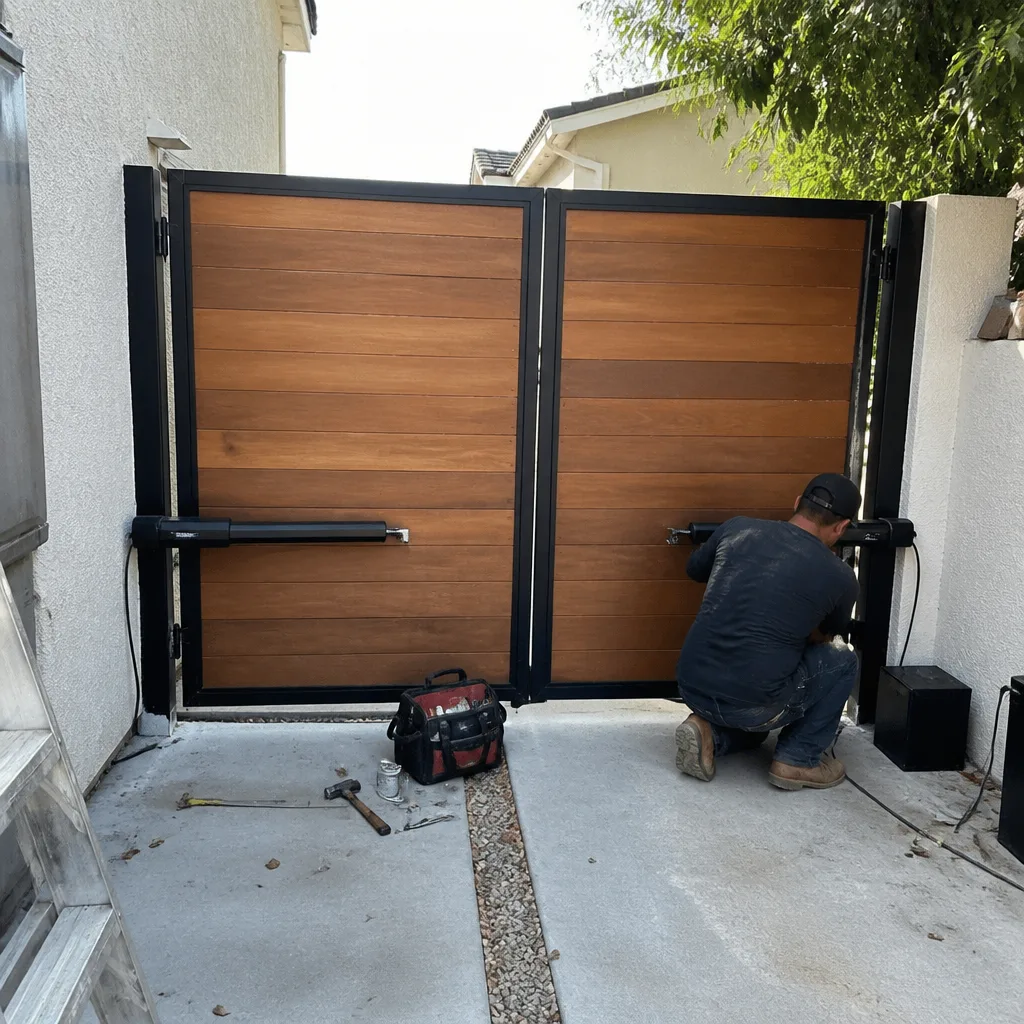 After
After Before
 After
After Before
 After
AfterGate Repair Permits, Codes & Inspections in CA: What You Need to Know
Most residential gate repairs in California don’t require a permit. But the exceptions are specific, consequential, and frequently misunderstood by both homeowners and the contractors working for them. Getting this wrong can affect your insurance, your home sale, and in one narrow case, your legal liability. In Sherman Oaks and across Los Angeles County, we see the same confusion every week: someone replaces a gate operator without realizing it’s an electrical alteration, or welds a new steel frame where the city considers it new construction. This guide breaks down what actually triggers a permit, what UL 325 demands from your automatic gate, and what happens when unpermitted work shows up on a disclosure form.
Quick Answer
Most residential gate repairs in California do not require a permit. Repairing a hinged post, replacing a gate motor with a like-for-like unit, or swapping out a picket panel is maintenance. Permits become necessary when you alter the structure, change the gate’s footprint, run new electrical, or install automation where none existed. UL 325 entrapment protection is mandatory for every automatic gate in California regardless of permit status. If your gate moves under power and lacks functioning safety edges or photo eyes, that is a federal safety standard violation and a homeowner’s insurance liability you don’t want to discover after an incident.
Table of Contents
- Repair vs. Alteration: Where California Code Draws the Line
- UL 325 and Your Automatic Gate: The Standard Nobody Explains
- Fire Department Access Gates: The Permit That Protects You
- HOA Gate Rules in Sherman Oaks: When the Board Outranks the City
- You Bought a House With Unpermitted Gate Work. Now What?
- What a Gate Permit in Sherman Oaks Actually Costs and How Long It Takes
- Common Mistakes to Avoid
- When to Call a Professional
- Frequently Asked Questions
- The Bottom Line
Repair vs. Alteration: Where California Code Draws the Line
California Building Code doesn’t care if your gate squeaks. It cares if the definition of the structure changes. A repair returns something to its original condition. An alteration changes what the gate is, how it operates, or how it’s powered. That distinction is the entire permit conversation in one sentence.
What counts as repair (no permit needed)
- Replacing a bent hinge that holds the same gate leaf in the same position
- Welding a broken joint on an existing steel frame without changing its dimensions
- Replacing a gate operator with a unit of the same voltage and swing direction
- Swapping out a rotted wood insert or a dented picket panel
- Resetting a gate that has sagged by re-hanging it on existing posts
In Sherman Oaks, where gates from the 1960s and 1970s are common, most of what we do falls squarely in this category. The steel gates on hillside lots in the Chandler Estates area are often original to the house. They rust, they sag, the operator quits. Repairs are maintenance under code, and maintenance doesn’t go through the Building and Safety counter in Van Nuys.
What counts as alteration (permit likely required)
- Widening the driveway gate opening so the gate leaf is longer than what was there before
- Setting new posts in concrete footings where no posts existed
- Running new electrical conduit from the house to the gate for a motor that’s being added for the first time
- Raising the gate height above what the original plan showed
- Replacing a manual swing gate with an automatic gate operator
That last one trips up more Sherman Oaks homeowners than any other. A manual gate has no electrical feed. Add an operator, and you’ve just added electrical to a structure that didn’t have any. That’s an alteration under the California Electrical Code, and it requires a permit from the LA Department of Building and Safety. The same applies in reverse: removing an automatic operator and replacing it with a manual gate doesn’t trigger a permit, because you’re removing the powered component.
We’ve been asked to “just make it work” plenty of times. We get it. But the person who fixes the gate without the permit is not the one who answers for it at escrow. More on that later.
The structural gray zone: posts and footings
A gate sags in the hinge post, not in the middle, and that is where we start on most repair calls. If the post itself is split at the base or the footing has cracked and rotated, replacing just the panel means you’ll fix it twice. Here’s the permit trigger: replacing a post in the same location, with the same size footing and the same dimensions, is repair. Replacing it with a larger post because the gate is getting heavier, or moving it to change the leaf size, is alteration. In Sherman Oaks hillside communities, post footings on slopes often require an engineer’s signoff if the depth or size changes, because hillside structural requirements kick in above a certain gradient. A flat lot in Van Nuys might not blink at a 30-inch footing. A hillside lot with a 2:1 slope is a different animal, and LADBS treats it that way.
We work on gates for properties across the San Fernando Valley, and the Sherman Oaks gate repair calls that start with “it’s rusted off at the bottom” usually end in a post replacement. Whether it needs a permit depends on what we find when the old one comes out. That’s the part to get right.
UL 325 and Your Automatic Gate: The Standard Nobody Explains
California’s UL 325 standard for automatic gate operators is a federal safety requirement, not a suggestion. Hal has seen installations that failed it badly enough that a child could have been trapped, installed by a licensed contractor who just didn’t know the rule. Here’s the part that matters: UL 325 is not a permit question. You can have a fully permitted gate installation that violates UL 325, and you can have an unpermitted repair that meets it. The two systems don’t talk to each other, which is exactly why homeowners end up with problems neither one catches.
UL 325 governs automatic gate operators in two categories. Class I gates are for residences and apartments up to four units. Class II, III, and IV cover commercial sites, industrial facilities, and airports. For the Sherman Oaks homeowner, Class I is the category that matters. The standard mandates entrapment protection devices on every automatic gate: either a monitored safety edge on the leading edge of the gate, or a photo eye sensor positioned to detect a person or vehicle in the gate’s path. On a swing gate, the protection requirement covers the open edge and the area between the gate and the gate post. On a slide gate, it covers the entire lead edge and the post it travels toward.
How to check if your existing gate meets UL 325
- Open and close the gate using the operator, then press on the leading edge where it meets the post while it’s closing. If the gate doesn’t reverse or stop within two seconds, the entrapment protection is not functioning.
- Look for a photo eye. It will be mounted at the open end of a swing gate’s travel path or at the closing edge of a slide gate, roughly 12 to 24 inches off the ground, aimed across the gate’s path. If you don’t see one, and there’s no visible safety edge strip along the moving edge, the gate lacks required protection.
- Check for a manual release. Every automatic gate must have a way to disengage the operator and move the gate by hand. A padlockable release knob or a key switch on the pillar means the gate can be freed in a power outage or an emergency. If the operator is bolted on with no release, that’s a code fail.
- Check the gate speed. A Class I gate must not exceed a certain closing force. Stand in the path (carefully, with a hand on the release) and let it close against you. If it presses hard before stopping, the operator’s force setting is too high, which is a UL 325 violation.
We find non-compliant gates on about one third of the motor service calls we run in Sherman Oaks. A Mighty Mule installed on a fence post without a safety edge. A Ghost Controls unit wired without photo eyes because “the homeowner didn’t want the look.” A DoorKing operator on an apartment gate that was originally sold as commercial but installed without the required secondary entrapment device. Every one of those installations had something in common: the gate worked. It opened and closed. Until the day it didn’t stop when it should have.
What does non-compliance actually mean for your insurance? It means a denied claim and, depending on the carrier, a cancellation. Standard homeowner’s policies in California exclude liability arising from an unpermitted or code-violating automatic gate. If a child is injured or a delivery person’s vehicle gets crushed because your gate failed to reverse, the insurer’s adjuster will ask two questions: was the gate permitted, and did it meet UL 325 at the time of the incident. A “no” to the second one closes the file. That is not a hypothetical. We’ve been called after the fact by homeowners who had to settle out of pocket.
UL 325 applies even to gates installed before the rule
The grandfathering argument doesn’t work here. UL 325 has been updated repeatedly since the 2000 edition, and automatic gate operators manufactured after 2001 must meet the current standard. When an operator is replaced, the entire assembly is expected to come up to current requirements, not just the motor. That means a 1998 sliding gate with a 2023 DoorKing operator should now have current entrapment protection installed. Not “eventually.” Not “when the customer is ready.” The operator carries the requirement forward.
For automatic gates in Sherman Oaks and throughout Los Angeles, you can read more about what a proper operator installation involves on our gate motor and opener service page. The point here is simpler: test the gate yourself, once, with a piece of cardboard box held in the closing path. If the gate doesn’t reverse, call somebody.
Fire Department Access Gates: The Permit That Protects You
Some gates in Sherman Oaks sit across a driveway that leads to a hillside home with no other vehicle access. Those gates have a job to do when nobody’s home and a brush fire is moving up the canyon. The Los Angeles Fire Department has a gate access requirement for properties served by a gated driveway longer than 150 feet or located in a designated brush zone. The gate must be operable by the fire department without the homeowner present. That typically means a Knox key switch mounted on a pillar, a siren-activated sensor, or a padlock configured with an LAFD master key.
Here’s where a permit protects the homeowner. When a fire department access gate is installed or substantially modified, the fire department reviews the gate as part of the permit. They check swing direction (must not obstruct the road or a fire turnaround), clearance width (a minimum 20-foot clear opening for a fire apparatus, 14 feet minimum for a residential driveway in most LA County zones), and access hardware. If you skip the permit and install a narrower gate or a swing that opens toward the street, you may not find out until a brush inspection letter shows up. And in a fire event, a gate the engine can’t get through is a gate that gets pushed through with the front bumper. That bill is yours, not the fire department’s.
What LAFD requires on access gates in brush zones
- Knox key switch or siren-operable release on the fire department side of the gate
- Minimum clear width for the fire access route, usually 20 feet for a fire apparatus on a designated fire road
- Gate swing or slide direction that does not reduce the usable width of the access route when open
- Manual release that operates from the outside without power, so the gate can be opened in a power outage
- No lock or latch that requires a tool to open from the fire department side
Most homeowners never think about this until they’re standing at the kitchen window watching a fire engine try to position at their driveway. We’ve retrofit Knock key switches and siren sensors on gates throughout the Sherman Oaks hills, especially in the areas around Mulholland and north of Ventura Boulevard where brush clearance is part of living there. The good news is these retrofits are usually repair-level work: the gate structure doesn’t change, the access hardware changes. If the driveway width stays the same and no new footings go in, the permit conversation usually isn’t the main event. The fire department’s access checklist is.
If you’re not sure whether your property falls in a brush zone, the LAFD brush clearance map is searchable by address. If your zone shows up, check the gate hardware next time you walk past it. The Knox switch costs a fraction of what an emergency gate removal costs.
HOA Gate Rules in Sherman Oaks: When the Board Outranks the City
City code sets a floor. An HOA sets a ceiling. That’s how jurisdiction works in practice, and it’s why Sherman Oaks homeowners sometimes get a permit for work the HOA then rejects, or HOA approval for work that doesn’t need a permit at all. The city won’t enforce your HOA’s rules, and your HOA won’t enforce city code. They’re two parallel systems, and you’re the only person who has to satisfy both.
Sherman Oaks has a mix of single-family neighborhoods with no HOA at all and private gated developments with strict architectural committees. In gated communities, the HOA typically owns the common perimeter gate and the streets behind it, while the homeowner owns the gates leading to individual driveway pads. If the gate you want to repair is on the HOA’s common wall, the HOA is not just an approval body, it’s the customer. The board will have its own gate contractor or will require you to use one from an approved list. That’s HOA authority over common elements, and it trumps whatever a homeowner’s insurance or a city permit might say. If the board’s gate fails UL 325 and injures someone, the HOA’s insurance covers it, not yours. That is the one case where the liability sits with a board rather than a homeowner.
For your own driveway gate inside an HOA, the typical scenario in Sherman Oaks is more benign: the board has a gate style guideline (wrought iron, stucco pillars, specific paint colors) and a requirement that any exterior alteration get architectural approval before work begins. Replacing a broken hinge or a burned-out operator is maintenance, and maintenance usually doesn’t go through the board. But if you’re going from a wood picket gate to a steel powder-coated gate, or adding an automatic opener where the HOA’s design guidelines mention “manual gates only” in front setbacks, get the approval in writing first. Boards have long memories.
When the HOA and the city conflict
- Get both requirements in writing. Ask the HOA for the specific covenant, condition, and restriction language that applies, and ask LADBS for a code citation. You’re looking for the actual text, not someone’s memory of it.
- Build to the more restrictive standard. If the city permits a 6-foot gate and the HOA caps front setback gates at 4 feet, the HOA rule wins for aesthetics. If the HOA says all gates must be solid wood and LAFD requires a fire access gate to be openable or open-frame, the fire code wins. The fire marshal’s requirement is not negotiable at HOA meetings.
- If the HOA requires a gate design that fails UL 325 (a solid panel slide gate with no room for a photo eye, for example), get that concern in writing to the board. Boards are rarely gate experts, and a letter from a gate contractor explaining the entrapment hazard usually changes the conversation.
We see the same pattern in gated Sherman Oaks communities: a homeowner wants a gate operator, the HOA wants silence and curb appeal, and someone has to explain that UL 325 doesn’t bend for either one. It’s usually a short conversation once the board understands the liability. Full gate installations in Sherman Oaks often require us to coordinate directly with HOA boards, and it’s not the city permit that slows the job down.
You Bought a House With Unpermitted Gate Work. Now What?
This is the phone call we get from people who have just sold or just bought a house in Sherman Oaks and discovered, somewhere between the inspection and the closing table, that the powered gate at the driveway was installed without a permit. Or the gate was originally permitted, and then someone welded on a pedestrian inset or added an operator years later without pulling plans. On a standard home sale, unpermitted gate work shows up one of three ways: the seller discloses it (rare but happens), the buyer’s inspector flags it, or the title company’s permit history pulls up a gap. By the time you know about it, the deal is in motion.
Your realistic options, in order of what usually makes sense
- Ask the current owner to obtain a retroactive permit. LADBS has a process for regularizing unpermitted work. It involves bringing the work up to current code first, then filing for an “as-built” permit to legalize what exists. The seller typically pays for correction, not legalization. In a seller’s market, this request sometimes gets refused. In 2026’s market, Sherman Oaks sellers have been more willing to credit repairs than to chase paperwork.
- Ask for a seller credit and do the legalization yourself. This is often the cleanest path. The credit covers the cost of bringing the gate up to code and filing the as-built permit. You control the work, you know the gate is safe, and the permit closes before you list the house years later. This is the option that usually makes the most sense because it becomes a known, fixed cost instead of an open insurance and disclosure question.
- Accept the gate as-is and do nothing. For a manual gate that was welded without a permit, this is often fine. Manual gates without electrical components don’t create insurer issues. But for an automatic gate, doing nothing keeps a UL 325 question permanently parked in your driveway. Every time the gate closes on someone, the question comes back: was this permitted, and does it meet the standard?
- Remove the gate and start over. This is the nuclear option, but it’s the right one if the existing gate is non-compliant, unsafe, and rusted past what anyone would call repair. A full removal and new gate installation in Sherman Oaks gives you a clean permit from day one, with operator, safety devices, and access hardware all documented. It costs more than a retrofit, but it’s the only option that ends every future question about the old gate’s history.
The disclosure question is where homeowners feel the most heat. In California, the seller’s transfer disclosure statement asks whether there are any “structural modifications” made without permits. An automatic gate operator added without pulling electrical permits is a structural modification under the broad reading most inspectors and brokers use. If you’re the seller and you know the gate was done unpermitted, disclose it. If you’re the buyer, ask the direct question in writing before closing. The sellers who don’t mention the gate’s permit history are often the same ones who didn’t know the gate’s permit history, which tells you the answer wasn’t looked up.
What a Gate Permit in Sherman Oaks Actually Costs and How Long It Takes
For the homeowner who does need a permit, the numbers matter because they shape whether the job makes sense. Here’s what we typically see in Sherman Oaks and Los Angeles County as of 2026.
Typical gate permit costs in Sherman Oaks
- LADBS permit application for a gate alteration or new electrical: $250 to $600 in permit fees, depending on the valuation of the work
- Plan check fee for structural changes (new posts, taller gate, slope conditions): $200 to $400
- Electrical permit for a new operator feed: $150 to $300, typically pulled by the licensed electrician doing the run
- Total typical homeowner out-of-pocket for a permitted gate alteration: $800 to $1,500 including fees, not including the gate work itself
Here’s the context that doesn’t show up on the fee schedule: the permit cost is almost always less than the insurance cost of an unpermitted automatic gate after an incident. And the permit cost drops out of relevance anyway when the work is repair-level and no permit is needed at all. We tell every Sherman Oaks homeowner the same thing: before budgeting for permit fees, figure out whether the work is actually a repair. Half the time, it is.
Timeline: planning, inspection, completion
- Application submission to approval: 2 to 6 weeks for residential gate work at LADBS. Simple electrical permits for operator replacement can clear in less than two weeks if submitted by a licensed contractor with a good record with the department.
- Inspection scheduling: 1 to 2 weeks out once the work is complete and an inspection is requested. Rough electrical inspection happens before the trench is closed; framing or footing inspection happens before concrete placement.
- Total typical timeline for a permitted gate alteration in Sherman Oaks: 4 to 10 weeks from application to final signoff, with the work itself taking 1 to 3 days spaced between inspections.
That timeline is why a good gate contractor handles the permission sequence before ordering materials. A custom steel gate takes 4 to 6 weeks to fabricate anyway, and the permit runs in parallel. By the time the gate is ready to hang, the permit is ready for the first inspection. That’s the way to do it without having a finished gate sitting in the driveway for a month.
We’ve handled permits for homeowners from Sherman Oaks to Woodland Hills to Studio City, and the single biggest variable is what the planner flags in plan check. A flat-lot gate alteration goes through quickly. A hillside gate that needs an engineer’s stamp on the footing design takes longer, because the engineer’s review is not something LADBS can rush. If you want a full picture of what goes into a properly permitted gate installation, our installation page covers that process step by step.
Common Mistakes to Avoid
- Assuming every gate change needs a permit. The most common mistake goes in the opposite direction of what you’d expect. Sherman Oaks homeowners sometimes wait weeks for a permit on a job that was a repair all along. Replacing a hinge, re-hanging a sagging leaf, or swapping a like-for-like operator is maintenance. Don’t pay permit fees for work the code never required to be permitted.
- Assuming no permit means no inspection means no problem. The UL 325 standard applies with or without a permit, and the insurance company doesn’t need the city’s paperwork to deny a claim. An unpermitted automatic gate that lacks entrapment protection is a problem the day it’s installed, not the day the inspector never shows up.
- Letting an unlicensed welder set new gate posts to save money. We see this on Sherman Oaks hillside lots often: a “guy with a welder” sets two new posts, hangs a heavier gate, and two winters later the footing has rotated and the gate won’t close at the latch. By then, the shortcut has cost more than the engineered fix would have in the first place. Fix the panel without the post and you’ll fix it twice.
- Installing an automatic operator on a gate that was never designed for one. A timber post gate with a Ghost Controls arm bolted on can tear the post apart over time. Operators need a stable mounting point, which often means structural reinforcement. The operator’s instructions say “post must be structurally adequate.” Most people skip that line.
- Ignoring the HOA until the gate is already fabricated. In the private gated communities of Sherman Oaks, building the gate first and asking the board later is the most expensive order of operations possible. Approval before fabrication, always.
- Testing UL 325 compliance by standing in the gate’s path. Don’t do that. Use a piece of cardboard or a plastic bin. The standard requires reversal on contact or detection before contact with a test object. Your body is not a test object.
- Selling a house with a known unpermitted automatic gate and not disclosing it. The disclosure form asks. The buyer’s inspector will find it. And the liability for a non-disclosure follows you after close of escrow. Say what you know.
When to Call a Professional
Call a gate professional when the gate is automatic and you’re not sure whether the entrapment protection is working. Call when the post is cracked or rotted at the base, when the gate has dropped enough to drag on the driveway, or when an operator is being added to a gate that’s never had one. High-tension garage-door springs are the famous danger, but automatic gates carry their own hazards: a 400-pound steel leaf under power doesn’t stop for a finger in the wrong place. If the gate motor has a manual release and you’re not sure how to use it, that’s also a call. Gatewood Fence & Gate offers free estimates in Sherman Oaks. We’ll look at the gate, tell you whether it’s a repair or an alteration, and quote the work up front. Call (818) 873-5061.
If you’re somewhere else in the Valley, we still come out. The same owner shows up in Sherman Oaks, Encino, Van Nuys, Studio City, and the surrounding areas. You can see more of what we do on the Gatewood Fence & Gate home page, including the full scope of our gate repair work.
Frequently Asked Questions
Most gate repairs in Sherman Oaks don’t require a permit. Replacing hinges, re-hanging a sagging gate, welding a broken joint on the existing frame, or swapping a gate operator for a like-for-like unit is repair work under California Building Code and doesn’t go through LADBS. You typically need a permit only when the structure changes (new posts, wider opening, taller gate) or when new electrical is run to power a gate that wasn’t automatic before. If you’re not sure which category your job falls into, call (818) 873-5061 and ask – estimates are free, and the answer usually takes about five minutes.
UL 325 is the safety standard that governs automatic gate operators in California, and it applies to every residential automatic gate regardless of when the gate was installed. The standard requires entrapment protection, a means of reversal if the gate meets resistance, and a manual release that works from outside the gate. If your automatic gate doesn’t reverse when it touches a test object and has no photo eye or safety edge, it’s not compliant. Call us for an inspection if you want to know where your gate stands.
No. UL 325 applies only to automatic gates. Manual gates, even heavy steel ones, are subject to local building code for structural work (posts, footings, height restrictions) but have no entrapment protection requirements. The permit requirements for manual gates in Sherman Oaks follow the same repair-versus-alteration line: replacing or re-hanging is maintenance, adding new posts or altering the structure is a permit question.
Your insurance carrier can deny liability claims arising from the gate, and LAFD or LADBS can require remediation if the gate is on a fire access route. In practice, a failed gate usually means replacing or adding the missing entrapment protection, adjusting the operator’s force settings, or both. The fix is often less expensive than homeowners expect, especially when compared to the cost of an incident.
Yes, if the gate is within the HOA’s common area or governed by a recorded architectural guideline. HOAs in Sherman Oaks can restrict gate style, height, color, and automation in front setbacks. But an HOA cannot override fire code access requirements or UL 325 safety standards. If the board’s gate requirements create a safety conflict, the fire code and safety standard win. Get the board’s specific rule in writing before you build, and call (818) 873-5061 if you need help evaluating the conflict.
For the repair work that actually requires a permit in Los Angeles County (structural alterations or new electrical), typical LADBS permit fees run $250 to $600, with additional plan check fees of $200 to $400 when structural changes are involved. An electrical permit for a new operator feed typically adds $150 to $300. Most gate repairs in Sherman Oaks don’t reach this stage because they classify as maintenance. Call (818) 873-5061 for an exact quote on your specific gate.
The Bottom Line
Most gate repairs in California don’t require a permit, but the exceptions matter. Structural changes, new electrical, and adding automation to a manual gate are the triggers. UL 325 applies to every automatic gate with or without a permit, and that standard is what your insurance company will ask about after an incident. HOA rules in Sherman Oaks layer on top of city code, and fire access gates have their own requirements that protect you, not just the city. If you bought a house with unpermitted gate work, the cleanest path is usually a seller credit to bring the gate up to code and close the permit. Talk to someone who knows the difference between repair and alteration before you spend money on either.
Written by Hal Gatewood, Owner at Gatewood Fence & Gate, serving Sherman Oaks since 2001.