
Last updated August 26, 2026
Free on-site gate assessment - hinges, posts, and your LiftMaster or Nice gate operator checked before anything is quoted
The assessment is free and the quote is the invoice.
 Before
 After
After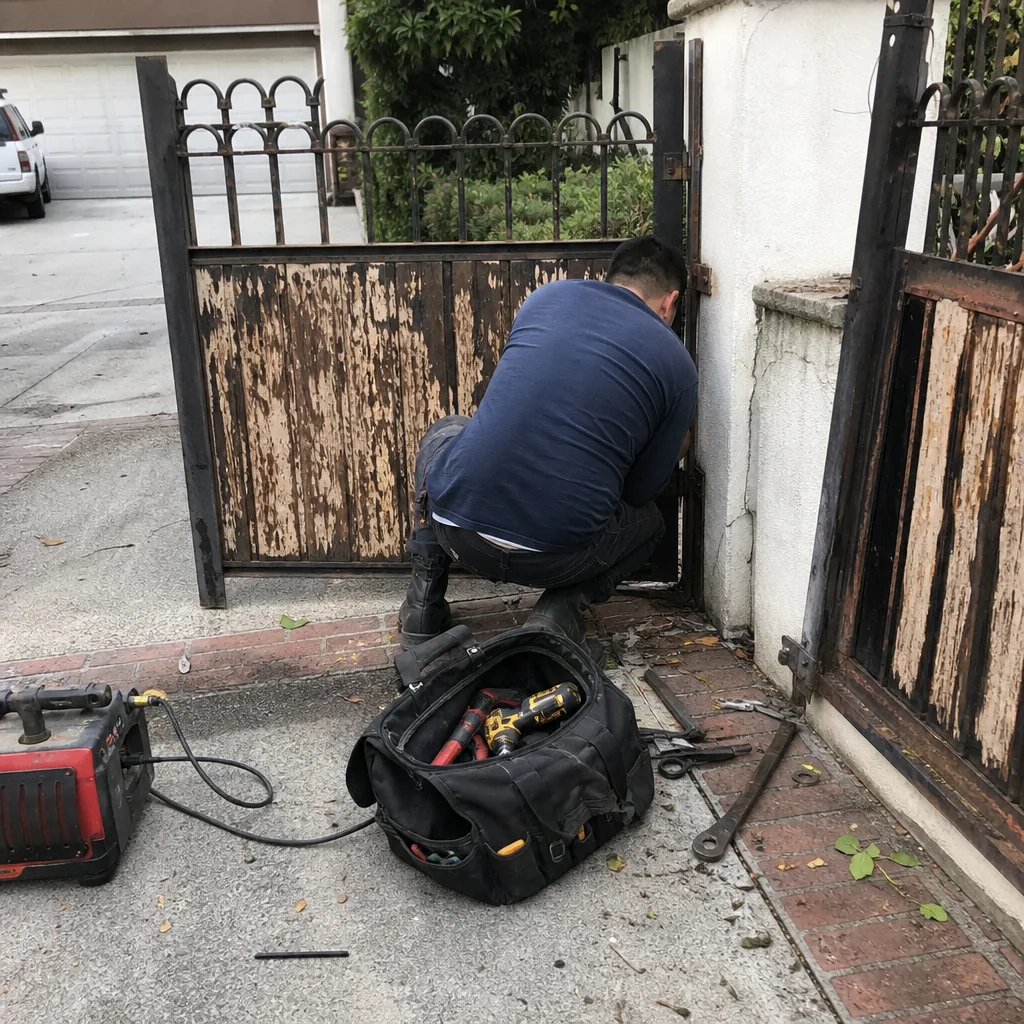 Before
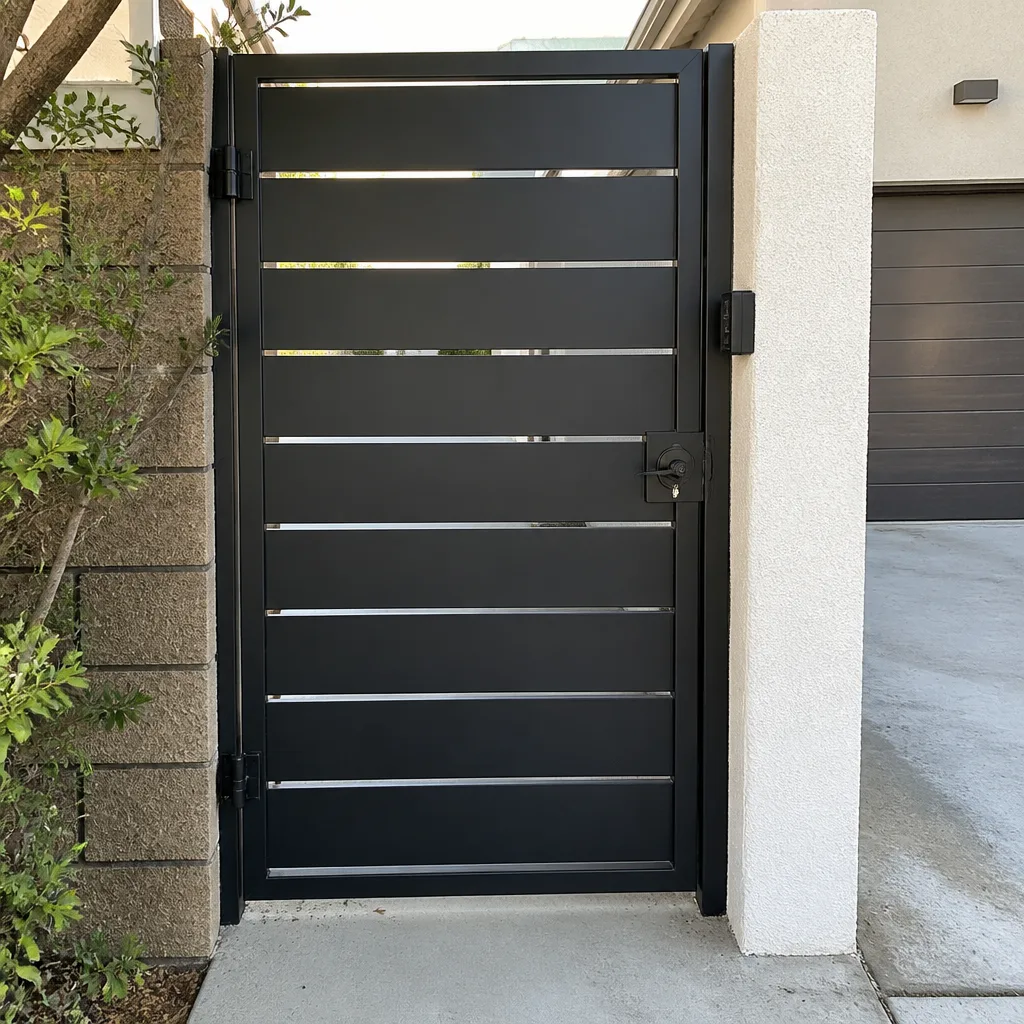 After
After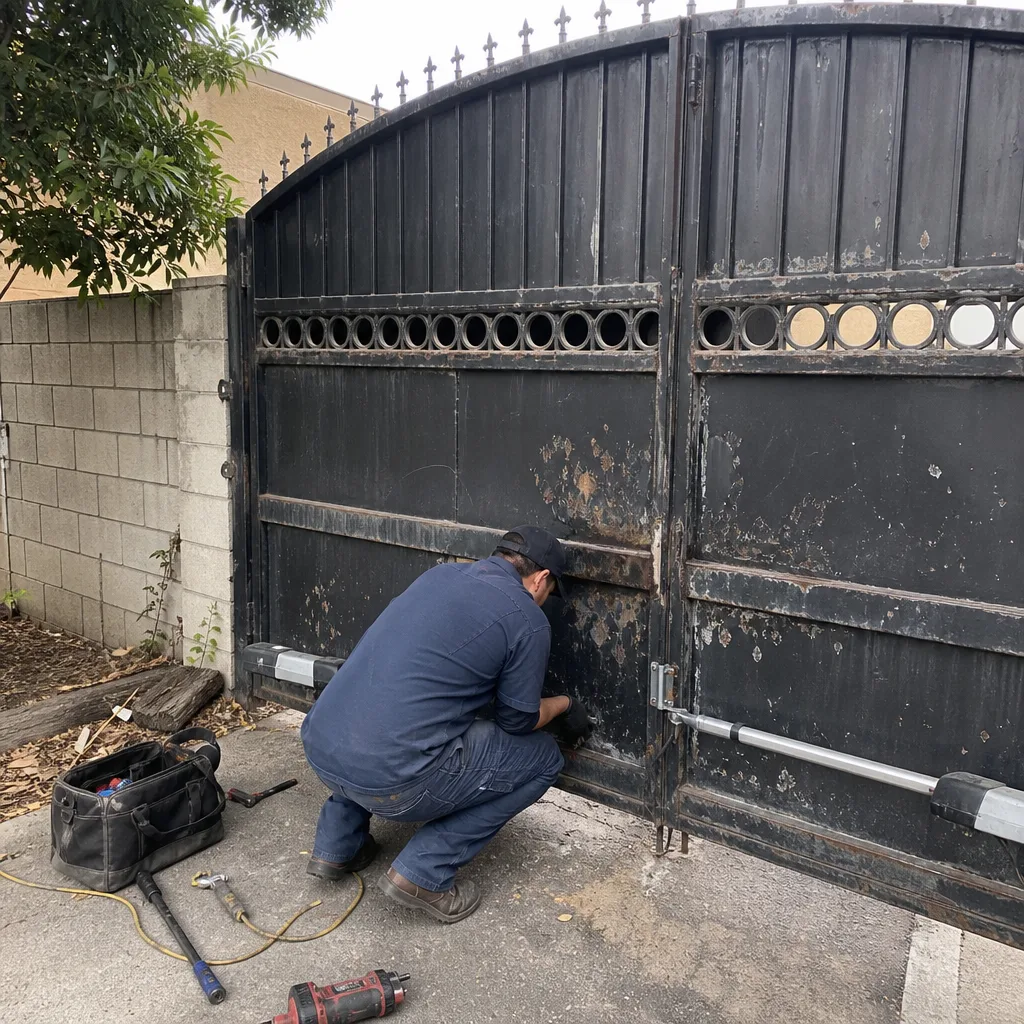 Before
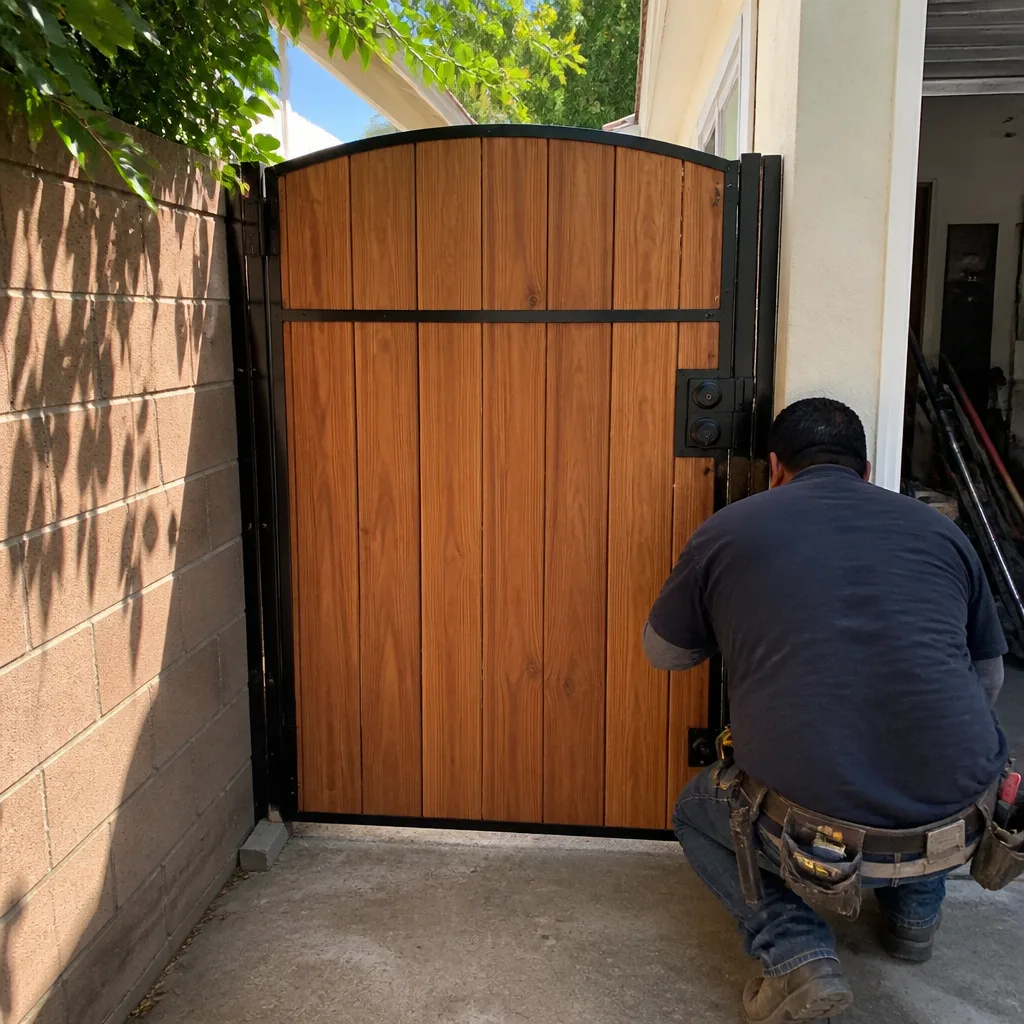 After
AfterThe Complete Guide to Gate Repair in Sherman Oaks
The most expensive sentence in gate repair is “this can’t be fixed.” Hal hears it from homeowners at least twice a week, usually right after another company said it, and usually right before he fixes the thing in under two hours. If you live in Sherman Oaks, your gate has been through heat cycles that warp powder coating, soil movement that torques your hinge posts, and at least one contractor who lubricated a chain that didn’t need lubricating. This guide covers every gate type, every common failure, and every honest repair path, written by someone who has been fixing gates on these same streets since 2001. For professional help, explore our Gate Repair services.
Quick Answer
Gate repair in Sherman Oaks typically costs between $180 and $850 depending on whether the failure is mechanical, electrical, or structural. Most repairs are completed in one visit, and the key to avoiding a $2,400 replacement you don’t need is diagnosing the root cause before anyone touches the gate. Gate repair in Sherman Oaks is what we do every day, and we quote the price before we start.
Table of Contents
- The Three Root Causes of Gate Failure
- Gate Types in Sherman Oaks and How Each One Fails
- How to Diagnose Your Gate Before Calling Anyone
- Why On-Site Welding Changes Everything
- What Gate Repair Actually Costs in Sherman Oaks
- What a 90-Day Workmanship Promise Should Look Like
- Common Mistakes to Avoid
- When to Call a Professional
- Frequently Asked Questions
- The Bottom Line
The Three Root Causes of Gate Failure
Every gate problem in Sherman Oaks falls into one of three categories. Misdiagnosis is where the money disappears. A gate that grinds when it opens could be a $40 hinge bearing, a $350 operator gear, or a $1,900 post replacement. If you call three companies, you might get three answers, because each one is looking through the lens of what they sell. Understand the three categories below and you’ll know which answer is honest before you make the phone call. For deeper reading, see our DIY vs Professional Gate Repair: The Sherman Oaks Homeowner’s Decision Guide.
- Mechanical failure - You can see it. Hinges that sag, wheels that bind, chains that jump, brackets that crack. These account for roughly six out of ten Sherman Oaks gate repairs we see. The gate was built correctly, but time, gravity, and heat did their work. Mechanical failures are almost always repairable.
- Electrical failure - You can hear it, or you can’t hear it. The operator hums but the gate doesn’t move, or the keypad lights up but nothing happens. This is motor capacitors, control boards, limit switches, photo eyes, and wiring connections. Electrical failures need a multimeter and someone who knows the difference between a short and a bad ground. They are repairable more often than most companies admit.
- Structural failure - The post is loose in the ground, the driveway has shifted, or the gate frame itself is racked out of square. This is the category where dishonest quotes live, because structural work is heavier and more expensive. But even a loose post can sometimes be re-set and welded in place rather than replaced entirely, depending on the condition of the steel.
Here is the Sherman Oaks factor most guides miss. The soil along the foothills, especially north of Ventura Boulevard toward Mulholland, expands and contracts with seasonal moisture far more than the flat valley floor. A gate post set in that soil without enough concrete mass will lean within five to seven years. Even moderate lean puts load on the hinge bearings and throws the latch out of alignment. We see this pattern most in the neighborhoods between Woodman and Sepulveda, where the ground has more clay and the houses are older. It is not a mystery; it is geology. And a fix that ignores the soil ignores the real problem.
Gate Types in Sherman Oaks and How Each One Fails
Different gates fail differently. Knowing what you have is half the diagnosis. Here is what we see on a weekly basis, by gate type.
Sliding Iron Gates
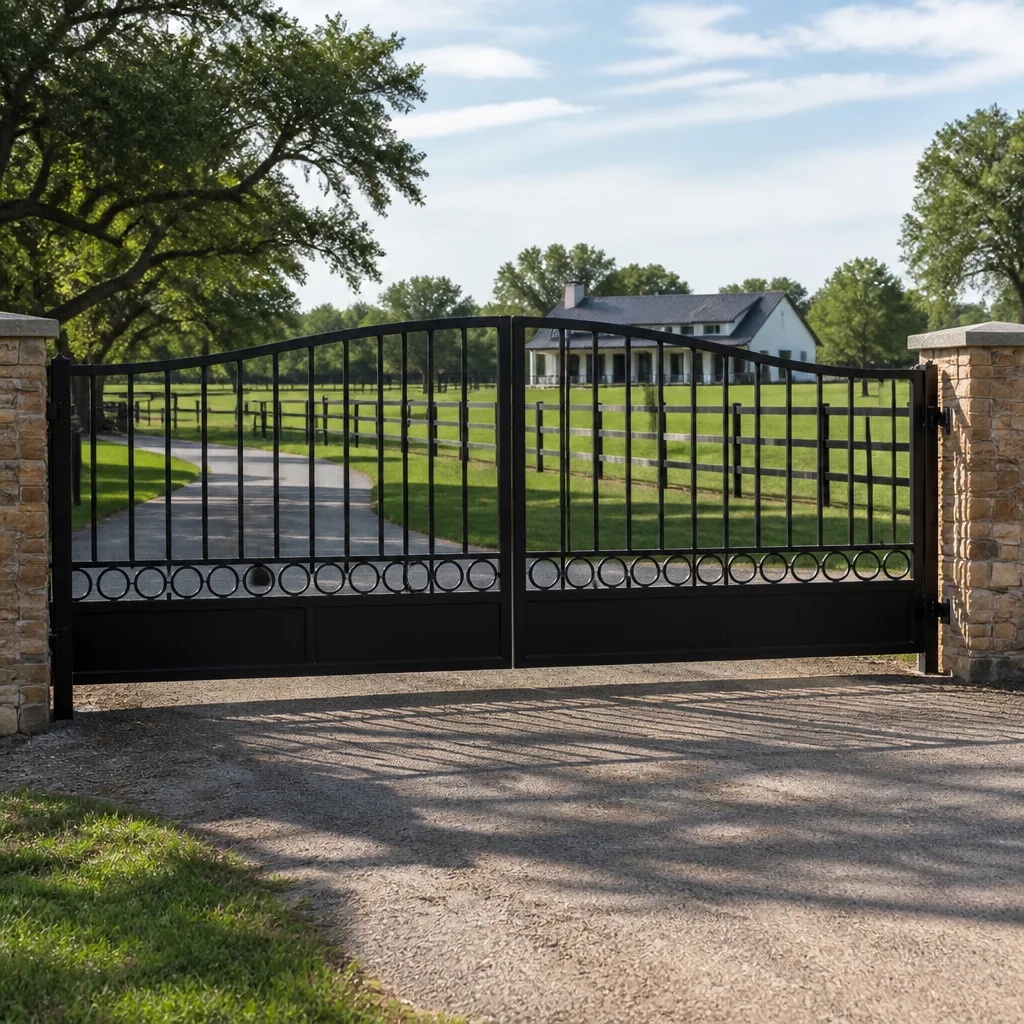
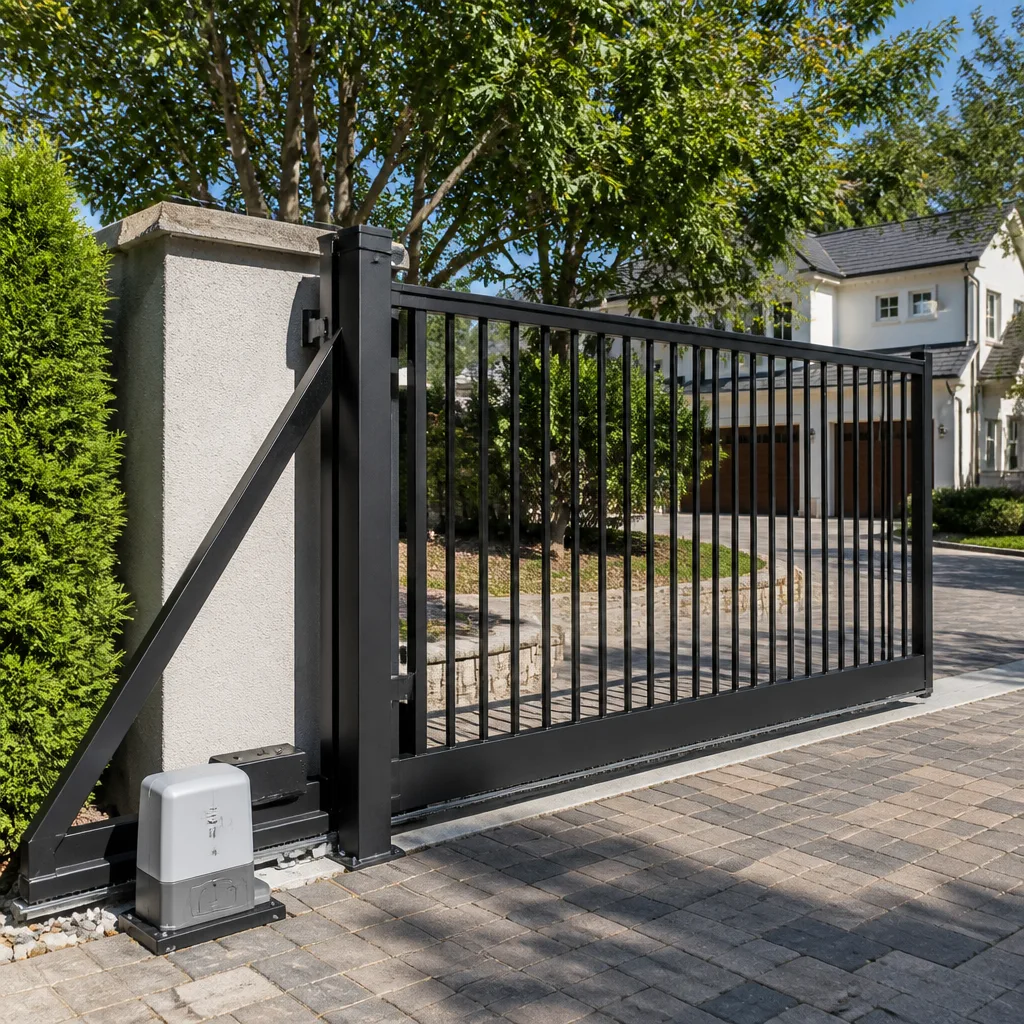
Sliding gates are common on the wider driveways east of the 405, especially south of the Boulevard. Their weak points are the track, the wheels, and the chain tension. Dirt and debris collect in the track, the wheels grind through it, and the gate starts to drag. Then the operator motor works harder, overheats, and burns out. The fix is usually cleaning the track, replacing worn wheels, and adjusting chain tension. Cost is typically $200 to $450. Replacing a slide gate because it drags is like replacing a car because the tires are bald. It happens, but it shouldn’t.
Swing Wood Gates
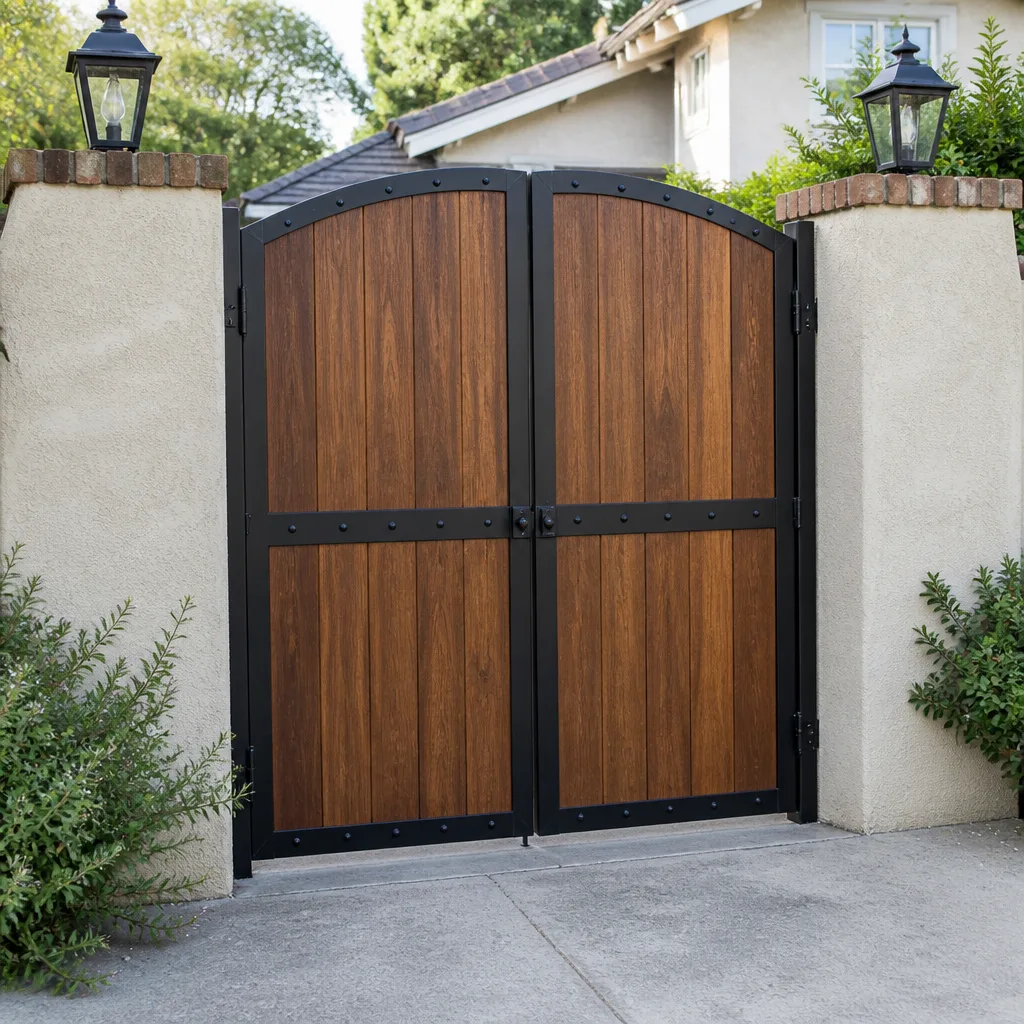
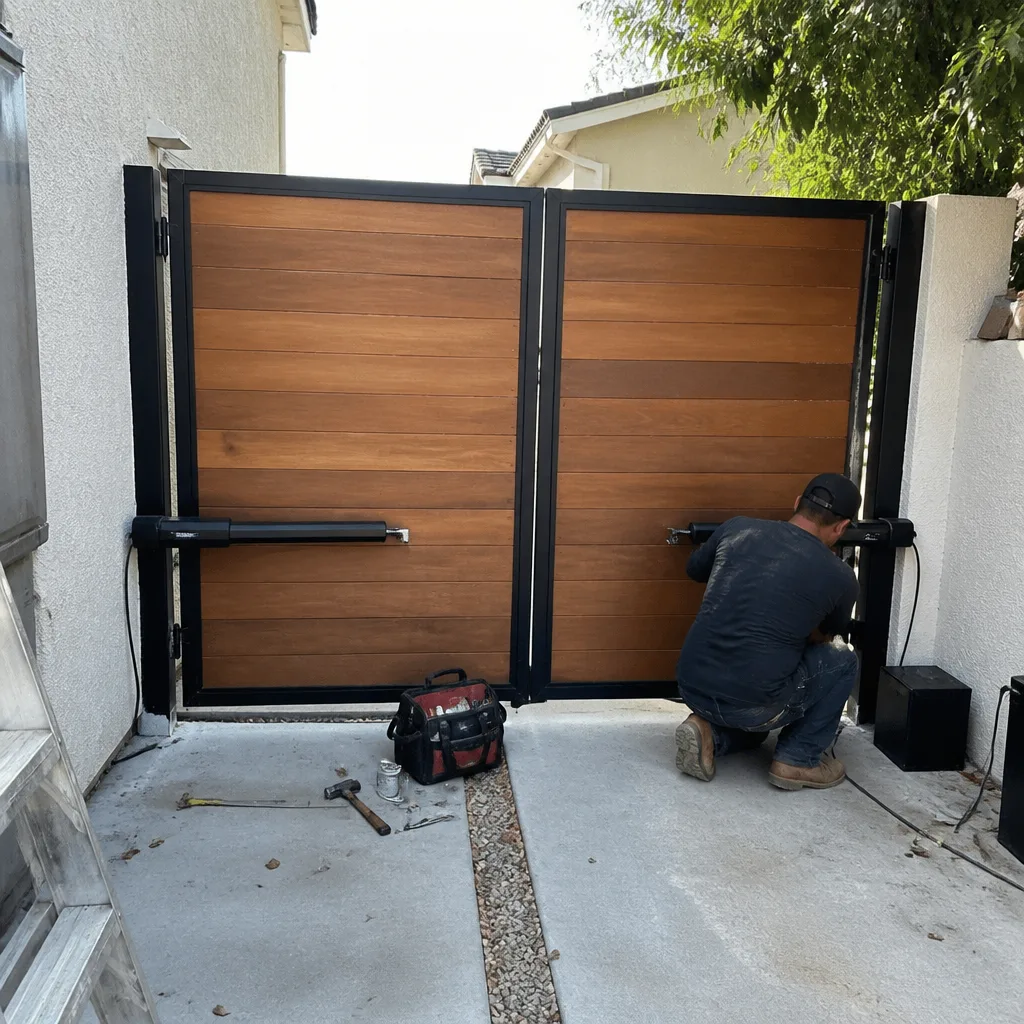
Wood gates are quieter but more prone to structural issues. Moisture from irrigation, termites, and plain old gravity pull the frame out of square. The gate sags, the latch no longer lines up, and someone cranks the hinges to compensate. That helps for a month. Then the post takes the strain instead of the hinges, and now you have two problems. The honest repair sequence is: check the frame square, replace rotted wood if present, replace the hinge bearings, and only then reset the post if needed. A gate sags in the hinge post, not in the middle, and that is where we start.
Automatic Driveway Gates
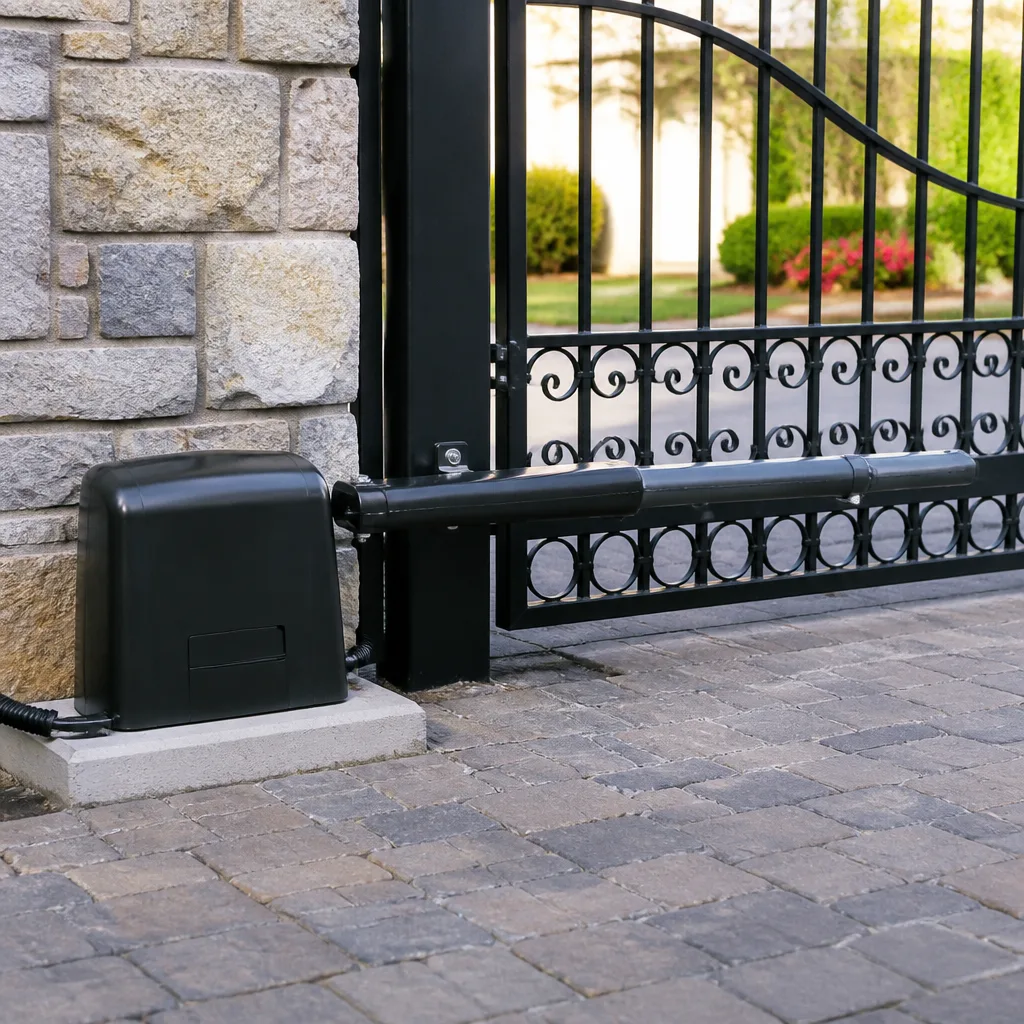
Automatic gates combine both worlds: a steel or aluminum frame, an operator, and a control system. The most misdiagnosed automatic gate symptom is the gate stopping halfway. The usual suspects are the limit switch, the safety sensor wiring, or a dying capacitor. But in Sherman Oaks specifically, we also see intermittent issues caused by heat. A south-facing driveway in August gets hot enough that the operator’s thermal protection trips mid-cycle. The gate works fine in the morning and fails at 3pm, and a company that tests it at 9am tells you the board is bad. It is not the board. It is the sun. Proper fix: relocate the operator, add a sun shield, or upgrade to a heat-rated unit. Cost: $150 to $500, depending on what’s needed. A new board you didn’t need would run you $700.
For more on what a full gate installation in Sherman Oaks involves, that guide covers it step by step. But this page is about repair, and repair is where the savings live.
How to Diagnose Your Gate Before Calling Anyone
You don’t need tools to run a basic diagnosis. You need ten minutes and a set of eyes. Here is the step-by-step we walk through on every service call, written so you can do a version of it from your driveway.
- Look at the gate from twenty feet away. Is the top edge level? Is one side higher than the other? A sag of half an inch is visible from across the street. If the gate is not level, the problem is structural or hinge-related, not the motor.
- Push the gate by hand in manual mode. Most operators have a release handle or key. If the gate moves smoothly by hand, the mechanical path is okay and the problem is in the operator or power supply. If the gate catches, drags, or grinds, the problem is physical: wheels, hinges, or track.
- Listen to the operator when the gate tries to move. A humming sound with no movement is a capacitor or a jammed gear. A clicking sound with no movement is usually a dead battery or a bad relay. A complete silence is power: breaker, fuse, or a short in the low-voltage line.
- Check the photo eyes and safety edges. Two small sensors on either side of the gate opening should face each other. If one is dirty, misaligned, or in direct afternoon sun, the gate will refuse to close. This is the most common no-cost fix in Sherman Oaks: wipe the lens, realign it, done.
- Inspect the hinge posts and bracket welds. Put your hand on the post and have someone push the gate gently. Do you feel movement in the post? If the post moves, that is structural, and no amount of hinge adjustment will fix it.
Once you know which category you’re in, you can call with confidence. If someone quotes you a replacement based on a phone call, without running through these steps in person, hang up and call someone else. That is the single best piece of consumer protection advice on this page.
Why On-Site Welding Changes Everything
Here is a plain fact that most Sherman Oaks homeowners never hear: a large portion of gate repair is welding, and most gate companies do not weld. They replace. A bracket shears off a steel gate, and their solution is a new gate, because they have no way to reattach the bracket in your driveway. The gate gets hauled off, the scrap steel goes to the yard, and you pay for a new fabricated gate when a $60 bracket and a good weld would have fixed it for another decade.
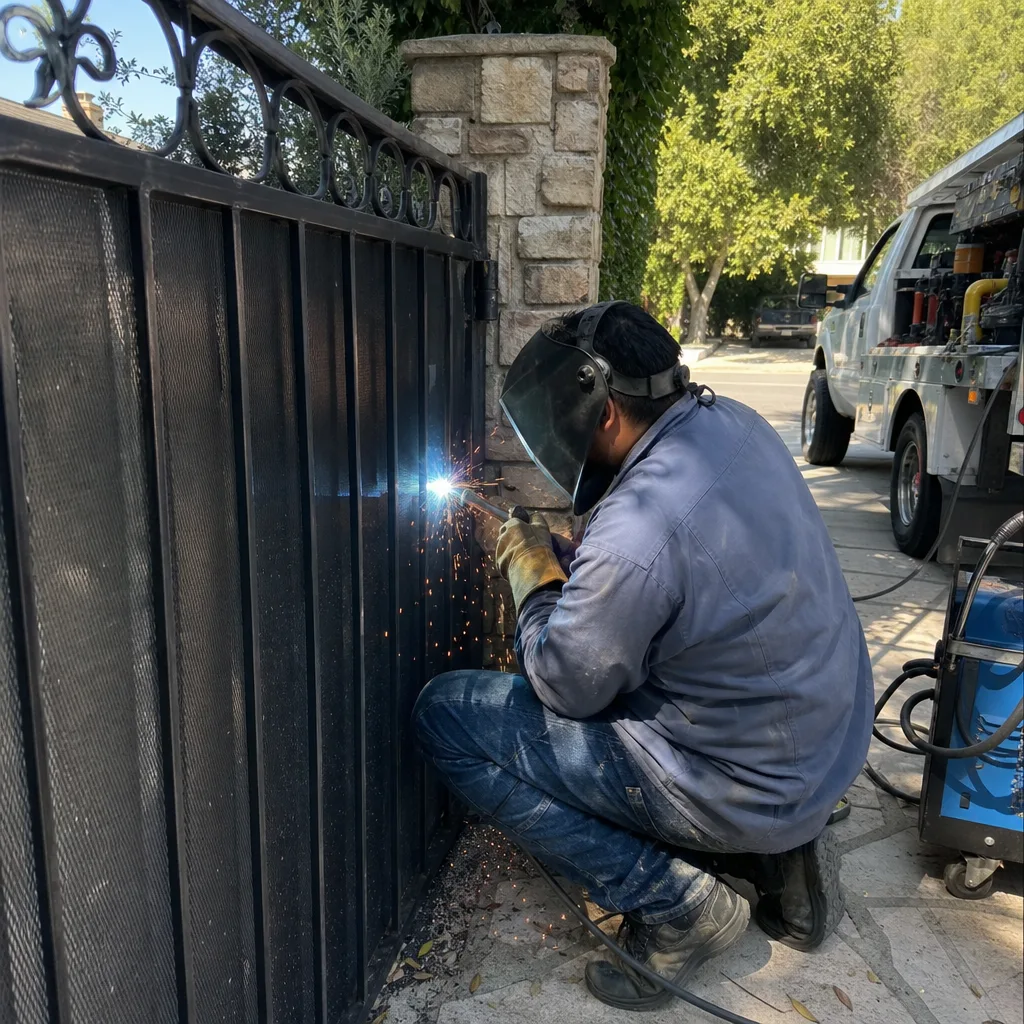
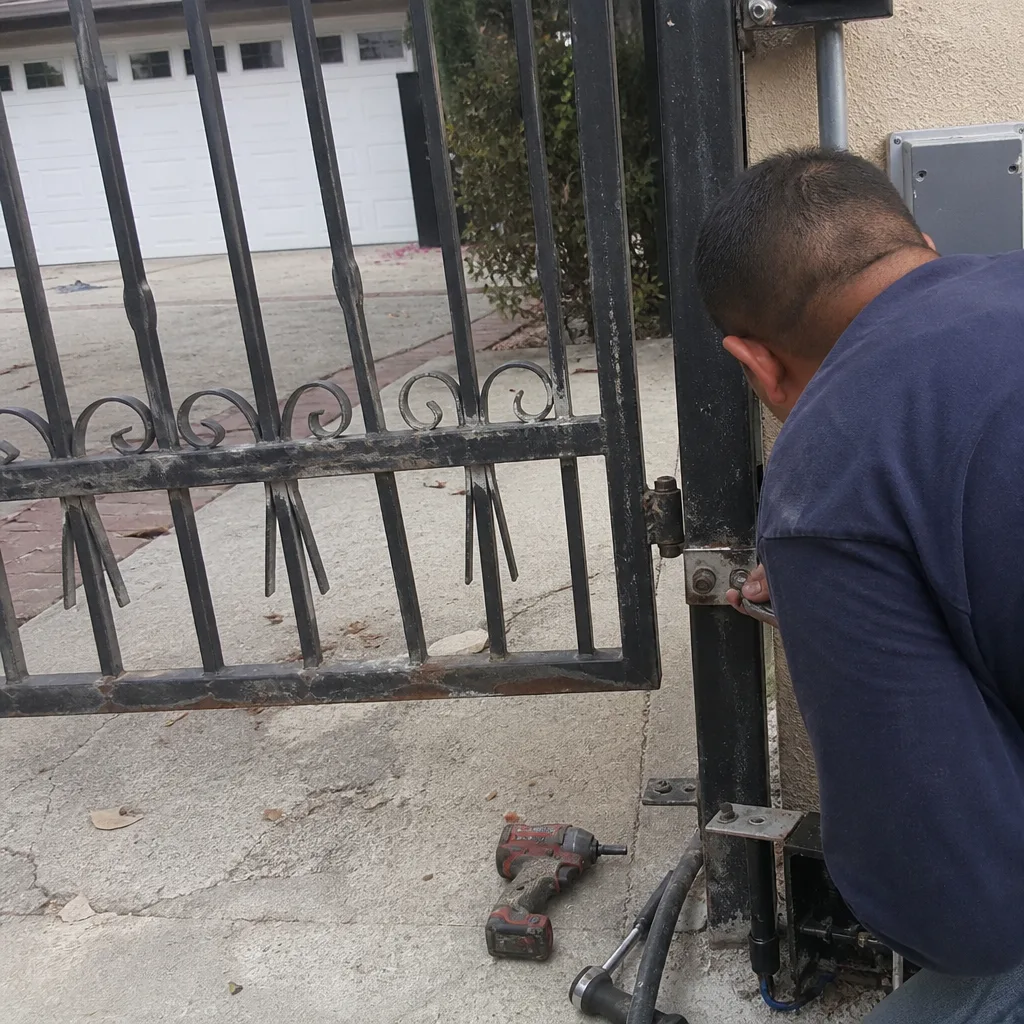
Hal welds on site. That means the gate stays right where it is, in your driveway, in Sherman Oaks, while the repair happens in real time. Forged bracket repair, cracked weld repair, post reinforcement, chain tensioner replacement, hinge re-seating. These are jobs that take under two hours when the person doing them has a welding rig on the truck. Fix the panel without the post and you’ll fix it twice. Fix the post without the panel and you’ll fix it twice. Do both at once, on site, and you’re done.
The economics are not subtle. A welded bracket repair runs $150 to $300. A replacement sliding gate for a standard Sherman Oaks driveway runs $1,800 to $2,400, plus install, plus haul-away. The companies that push replacement aren’t necessarily dishonest. Some of them just can’t weld. The result is the same invoice, but now you know the question to ask before anyone touches your gate: “Can you weld this on site, or are you replacing it?” If the answer is replacement and the damage is a cracked bracket, call Gatewood Fence & Gate home instead.
What Gate Repair Actually Costs in Sherman Oaks
Here are real numbers, not ranges from a national average chart. These are the prices we quote in Sherman Oaks, from Sepulveda to Coldwater Canyon, Ventura Boulevard to Mulholland Drive.
| Repair Type | Typical Cost in Sherman Oaks | Time on Site |
|---|---|---|
| Hinge replacement (wood or steel gate) | $120 - $280 | 1-2 hours |
| Track and wheel service (sliding gate) | $150 - $350 | 1-2 hours |
| Chain and tensioner repair | $80 - $180 | Under 1 hour |
| Operator capacitor or limit switch | $100 - $250 | Under 1 hour |
| Control board replacement | $350 - $700 | 1-2 hours |
| Photo eye or safety edge repair | $80 - $200 | Under 1 hour |
| Post re-set and weld reinforcement | $400 - $900 | 3-5 hours |
| On-site bracket or weld repair | $150 - $300 | 1-2 hours |
| Full operator replacement (with motor) | $800 - $1,800 | 2-4 hours |
Every price above is quoted and agreed before any work starts. Not an estimate that might swell at the door. The number on the quote is the number on the invoice. If you bring a written estimate from another company, we’ll give you a free second opinion on it, and if we find a problem they missed or a repair they recommended that you don’t actually need, we’ll tell you. That is a standing offer, and if you know someone who has been burned by a quote that grew after the work started, tell them about it.
For opener-specific pricing, there’s a full breakdown in the gate motor and opener guide for Sherman Oaks.
What a 90-Day Workmanship Promise Should Look Like
Most contractors promise you the work is good and hope you never call back. Hal puts it in writing. The 90-Day Done Right Promise is stamped on every job, and it says this: if the repair doesn’t hold, we come back and fix it, no runaround, no re-quoting, no “that’s a different problem now.” One call brings him back.
Ask yourself what a guarantee actually means when it’s not written down. If the same hinge starts sagging three weeks after a repair, does the original contractor come back because it’s their work, or do they explain why it’s actually a new issue? That ambiguity is where bad contractors hide. A written 90-day promise removes it. It also tells you something about the work itself: a repairman who knows a fix will last is not afraid to put that in writing. A repairman who suspects it won’t holds his breath for 30 days and ignores your calls.
Here is what the promise covers in plain language. If the repair fails within 90 days, the labor to fix it is free. If a part we installed fails within 90 days, we replace it free. If the gate develops a new problem, that is a new repair, but we’ll tell you that upfront, show you what broke, and quote the price before we touch it. No fine print, no exceptions buried in a contract. The name is on the shop, and the shop is down the road. That is the oldest accountability there is.
Common Mistakes to Avoid
- Cranking the hinges instead of finding the sag. When a wood gate sags in Sherman Oaks, the frame or post has moved. Cranking the hinge to compensate bends the hardware and accelerates post failure. Fix the post first; the hinges will follow.
- Lubricating a chain with WD-40. WD-40 is a solvent, not a proper chain lubricant. It strips what little lube remains, and the chain runs dry in a week. Use a lithium chain spray, or better yet, let the person doing the repair handle it.
- Ignoring a grinding slide gate. Dirt gets into the track, the wheels grind through it, and the gate drags. By the time it stops moving entirely, the operator motor has been overloading for months. Track service is $150. A new operator is $800. You can see which one the garage budget prefers.
- Assuming the opener brand determines the fix. A LiftMaster, FAAC, BFT, or Mighty Mule operator all use the same basic architecture: motor, capacitor, board, limit switches, safety inputs. The brand affects part cost, sometimes, but not the repair path. A company that charges more because the operator is German is charging you for the name.
- Letting a loose post sit for another season. In Sherman Oaks, a post that moves an inch in January will move two inches by July. Set it when it first fails, before the next rain cycle makes the hole bigger, the concrete pour heavier, and the repair more expensive.
- Replacing a gate that just needs a weld. A cracked bracket, a sheared hinge, a snapped chain tab. These are welding jobs, not replacement jobs. Ask the question: can you weld this, or are you replacing it?
When to Call a Professional
Call a professional when the post moves, when the gate stops mid-cycle repeatedly, when the operator makes any sound you haven’t heard before, or when you’ve already tried the basic fixes and the problem came back. Gate springs, especially on counterweighted slide gates and older iron swing gates, are under tension and can hurt you if they release wrong. We recommend leaving anything involving spring tension, electrical wiring, or structural post work to someone who does it daily. A trained professional with the right tools and a healthy respect for the equipment will always finish faster and safer than a weekend attempt. Gatewood Fence & Gate offers free estimates in Sherman Oaks. Call (818) 873-5061 and a live person picks up.
Frequently Asked Questions
Gate repair in Sherman Oaks typically costs between $180 and $850, with simple bracket and hinge fixes at the low end and structural post work or operator replacement at the high end. We quote the exact price before any work begins, and there’s no trip charge inside the county. Call (818) 873-5061 for a free estimate on your specific gate.
Yes, in most cases. We stock common parts for LiftMaster, FAAC, BFT, and Mighty Mule operators on our trucks, and Hal welds on site, so a repair that another shop would schedule out for a week is often done the same afternoon. Call (818) 873-5061 and we’ll tell you honestly what we can do today before you hang up.
Repair whenever the frame, post, and panel are structurally sound. Replacement only makes sense when rust has compromised the steel, the wood has rotted through in multiple sections, or the post has failed beyond re-setting. If another company says replacement and you’re not sure why, get a free second opinion.
In Sherman Oaks, a south-facing driveway can overheat the operator enough to trip its internal thermal protection. The gate works fine in the morning and dies at 3pm, then works again after sunset. The fix is a sun shield, relocation, or a heat-rated unit, not a new control board. Some companies sell the board anyway. We test the gate at the time of day it failed, not the time of day that was convenient for the quote.
Yes. When we repair an automatic gate, we check the full low-voltage loop: photo eyes, safety edges, keypads, intercom, and the power supply. A repair that fixes the motor but ignores a misaligned safety edge is a repair that comes back. We fix the whole system in one visit.
We service LiftMaster, FAAC, BFT, Linear, Viking, Ghost Controls, DoorKing, Elite, and Mighty Mule. That covers nearly every automatic gate operator installed in Sherman Oaks over the last two decades. If you don’t know your brand, we’ll identify it when we arrive and quote the repair from there.
The Bottom Line
The difference between a $180 repair and a $2,400 replacement is usually just the diagnosis. Most Sherman Oaks gate failures trace back to three root causes, mechanical, electrical, or structural, and once you know which one you’re dealing with, the repair path is straightforward. On-site welding makes repairs possible that other companies can’t offer because they don’t have a welder on the truck. The 90-Day Done Right Promise is in writing, the price is quoted before work starts, and a live person answers the phone at (818) 873-5061. Show me the gate closing on its own and I’ll show you where it’s failing. That’s the whole guide, right there.
Written by Hal Gatewood, Owner at Gatewood Fence & Gate, serving Sherman Oaks since 2001.